Bringing Nature Into Behavioral Health Design
Considerations for Behavioral Health Spaces
- Biophilic design can support calmer, more reassuring behavioral health environments.
- Nature-inspired graphics and materials offer safer alternatives to live greenery and water features.
- Positive distraction, low-stimulation spaces, and visual cues can strengthen the patient experience.
- Successful strategies must balance therapeutic goals with durability, maintenance, and safety.
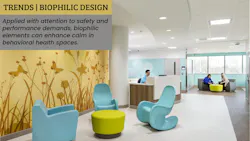
Human health and well-being are deeply connected to the design of our built environments. This is especially true in behavioral health spaces, where the impacts of design extend beyond aesthetics to support meaningful psychological and physical health outcomes. Design firms and manufacturers have increasingly looked to neuroaesthetics—a growing body of knowledge examining how sensory input, spatial organization, form, proportion, culture, and references to nature influence emotion, memory, and the brain and body.
Biophilic design applies one closely related principle: People possess an innate desire to connect with nature and other living systems. Therefore, biophilic elements are meant to foster this connection—whether encountered outdoors or through indirect experiences. Healthcare environments have already demonstrated the potential value of biophilic design in supporting patients and caregivers.
As outlined in Frontiers in Built Environment, studies in therapeutic environment theory cite a link between biophilic design and reductions in pain, stress, and anxiety, while advancing healing and recovery. Findings like these help promote a clear path to further transform behavioral health facilities.
Where Performance Meets Environmental Psychology
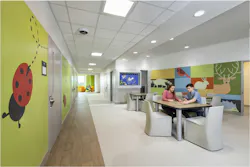
As discussed in Part I of this series, behavioral facility design strategies must first satisfy requirements for physical safety, durability, and maintenance. Within those parameters, designers can introduce additional layers that support psychological safety, positive social interaction, appropriate choice, and healthy self-expression for patients.
Live greenery and water features may offer biophilic value in many commercial and public environments, but their maintenance demands and potential safety risks can make them unsuitable for behavioral health facilities. Indirect references to nature—introduced through graphics, surface materials, artwork, and textiles—can support similar experiential goals while meeting demanding performance requirements.
When visualizing how biophilic elements can factor into behavioral health spaces, designers should keep three goals front of mind:
- Create positive distractions
- Establish calming spaces
- Provide engaging wayfinding
These goals often overlap in practice, but each offers a useful guide for considering how nature-inspired elements can support the behavioral health experience. Positive distraction is a logical place to start.
Create Positive Distractions
In environmental psychology terms, positive distraction is defined as “an environmental feature that elicits positive feelings and holds attention without taxing or stressing the individual, thereby blocking worrisome thoughts.” Biophilic design offers a dynamic foundation to build upon this concept.
In some behavioral health environments, patient safety may limit access to outdoor spaces. Nature-inspired imagery and organic patterns woven into wallcoverings, upholstered furnishings, and artwork bring the benefits of biophilia indoors.
These designs must also withstand stringent cleaning protocols, repeated touching or picking, heavy impact, and other safety concerns specific to behavioral health environments. Easy-to-clean surfaces and impact- and pick-resistant construction can preserve the integrity of nature-inspired imagery without compromising patient safety.
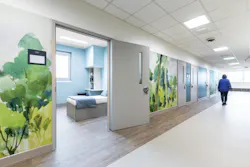
As an example, The Neurodiagnostic Institute, a facility designed by Four Point Design in Indiana, applied biophilic principles to create calming corridors throughout its center. Thorough research and client input informed the criteria for developing patient areas into comforting, therapeutic environments. Careful attention to finish selections and material detailing ensures patient and staff safety, while a base palette of neutral tones is accentuated by soft blues, muted greens, and sunshine yellow—hues that can create a calmer, more uplifting atmosphere. Furthermore, nature-inspired artwork ties the design concept together and provides positive distractions for patients.
Using plant life from Indiana’s native parks as a reference, Four Point Design developed custom vector imagery that was translated into watercolor-style landscape murals across multiple wall surfaces. The soft imagery, nature-based palette, and references to the regional landscape offer patients a connection to the outdoors and local community while directing attention away from the stressors of treatment.
Around the institute, other artworks and murals depict wildlife and silhouetted meadow landscapes to demonstrate an environment of care and comfort, rather than a sterile, institutional aesthetic.
Establish Calming Spaces
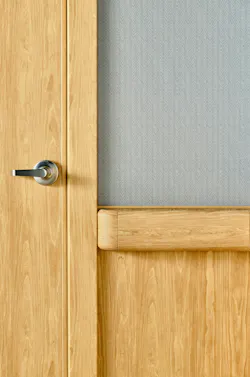
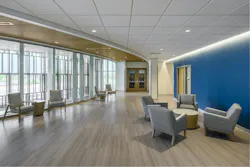
From facility entry to treatment rooms, biophilic elements can induce a calming effect and reduce anxiety for patients and loved ones. Combinations of soft color and curated vibrant accents, low stimulation patterns, smooth surfaces, and material effects such as woodgrain and stone-look doors, surfaces, wallcoverings, and flooring soothe the senses. With respect to each facility’s patient safety levels and needs, different areas may allow for variations in finishes and furnishings.
At Phoenix Children’s Hospital, brightly colored landscape illustrations enliven a long, windowless corridor used frequently by patients, families, and caregivers. Because this major circulation route is subject to considerable wear, the installation needed to pair visual impact with durability. High-resolution graphics reproducing artist Shara Hughes’ vivid flowers, plants, and sunset imagery were printed on customizable wall panels, creating a resilient pathway intended to offer calm, cheer, and comfort.
Biophilic design elements can also elicit a calming response in actively agitated or distressed patients. Research published in Scientific Reports suggests images of landscapes and natural settings may support parasympathetic activity associated with safety, rest, and recovery. For example, a low-sensory calm room could be designed with warm, low light levels, minimal furnishings, colors inspired by ocean views, and simple visual patterns that help patients self-regulate during distress.
Provide Engaging Wayfinding
Physically navigating unfamiliar healthcare environments can itself be a source of stress. When used for wayfinding, memorable graphics help patients and caregivers orient themselves within the facility. Nature-centered images, organic patterns, and outdoor scenes provide clear visual cues without creating unnecessary cognitive burden. This can help reduce confusion and frustration while promoting familiarity and an emotional connection to the space.
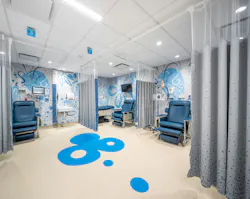
Facilities like Shriners Children’s Hospital in Galveston, Texas, serve vulnerable patients and families who have experienced extraordinary stress and uncertainty as a result of ongoing medical conditions. Thoughtful design can help to ease their way through the building and provide that visual and emotional connection. Visitors are greeted by large, organic patterns as they leave the elevator, with each floor establishing a different theme. Those wayfinding graphics coordinate with design elements throughout the floors, such as wall protections, crash rails, and privacy curtains. The scale and consistency of the biophilic visuals and palette provide an immersive element while helping patients and caregivers navigate the hospital with confidence.
Nature-Inspired Design in Support of Care
Biophilic design can strengthen a human-centered approach to behavioral health interiors. When thoughtfully integrated through positive distractions, calming environments, and engaging wayfinding, nature-inspired elements can help reduce stress, improve orientation, and support a more reassuring treatment experience.
In Part III of this behavioral health design series, you’ll learn more about how lighting, materiality, and color come together in sensory design experiences.
About the Author
 Amy Sweeting
Amy Sweeting
Amy Sweeting is the Product Manager for Interior Product Solutions at Construction Specialties, where she drives the strategic direction and lifecycle management of innovative products for commercial interiors. With over a decade of experience at CS, Sweeting has held diverse roles giving her a unique perspective on both operational execution and customer needs.
In her current role, Sweeting partners with cross-functional teams and clients to translate market insights into solutions that enhance functionality, aesthetics, and performance in interior spaces. Her approach combines design expertise with data-driven decision-making to ensure products evolve with industry trends and customer expectations.
Sweeting earned a Bachelor of Science in Interior Design from Meredith College in Raleigh, NC, and holds a Lean Six Sigma Green Belt Certification from Rutgers University, along with an Evidence-Based Design Certification—reinforcing her commitment to creating interior environments that enhance well-being, performance, and productivity.