Behavioral Health Facility Design: Begin By Balancing Safety, Dignity, and Therapeutic Outcomes
What Designers Will Learn
- Foundational considerations for behavioral health design—setting the stage for deeper guidance in this ongoing series
- How early decisions around therapy models and facility types inform future planning, detailing, and specifications
- Why balancing safety, dignity, and patient experience is the critical first step before layering advanced strategies
- How risk levels and patient privacy establish a framework designers will build on throughout the series
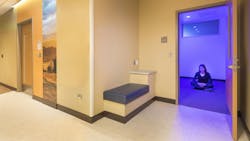
With nearly 60 million adults experiencing a mental illness in the past year, a large portion of the U.S. population is undergoing a mental health crisis, according to advocacy organization Mental Health America. This number represents more than 23% of all U.S. adults, and behavioral health illnesses are on the rise, according to MHA’s latest report:
- 1 in 5 Americans suffers from a mental illness.
- Almost half of Americans will experience an episode of mental illness in their lives.
- Nearly half of adolescents have had a mental disorder with 22% experiencing severe impairment or distress.
- Almost 50,000 Americans die annually by suicide.
Considering these statistics, it is not surprising that behavioral health construction has become one of the largest growing categories in the healthcare market and is expected to account for 40% of health-related projects over the next three years.
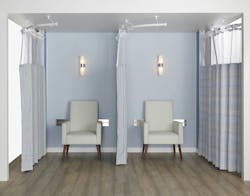
Demand for patient rooms at all levels of behavioral healthcare is growing, and the need for human-centered design alongside it. Expansions and renovations in particular can be challenging because older facilities were not designed to provide the level of patient safety recommended today.
Still, designing facilities to reflect updated treatment modes and safety considerations offers opportunities to expand and employ our growing environmental psychology knowledge base. The first in a series, this article starts designers on a path toward understanding the complexities of behavioral health facility design. Initially, we’ll cover starting points with regulations and foundational interior planning principles—approached through the lens of the patient experience—that will help you deliver safe, humane, and engaging spaces.
What Designers Need to Know
Essentials: Behavioral Health Facility Types
It’s imperative to understand the types of mental health treatment available, as defined by facility program, because each type has different safety guidelines you’ll need to note. There are three main resources that patients turn to for treatment.
Inpatient facilities have the highest level of restrictions and are generally associated with the highest risk for patient safety. In most inpatient centers, the patient has a tight schedule of treatment and social interaction, with very little alone time.
Residential treatment facilities accommodate patients on site for an average of 60 to 90 days. They offer high-quality, long-term mental healthcare within a structured, residential setting that contributes to healing and a sense of community.
Outpatient care can involve one or more mental health services that don’t require a prolonged stay in a facility. Treatment can be anywhere from short-term counseling to long-term care plans including therapy and/or medication.

Essentials: Therapy Methods That Influence Design
Looking at a few therapy methods offered in behavioral health facilities can give insight into the best design approach for each facility. Designing for current therapy methods can aid in construction planning and improve patient outcomes with these treatment methods, especially when multiple modes are offered and spaces support those activities.
Dialectical Behavior Therapy (DBT) combines cognitive behavioral therapy and mindfulness to help patients understand, accept, and change patterns that are causing difficulties. Prioritize a calming environment to help achieve that goal. Specialized therapy rooms for DBT with dimmable lighting, soothing artwork, and comfortable furniture can foster more appealing therapy sessions.
Art therapy encourages patients to express themselves through artwork. Art therapy creates a safer, more supportive, and functional environment in healthcare facilities by engaging patients through activities involving self-expression and creativity. Designers can aid in this activity by creating spaces that promote mindfulness through soothing environments.
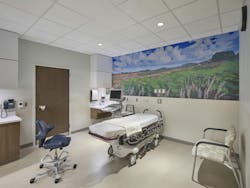
Social interaction between patients, also known as milieu, is often encouraged by staff, both in scheduled treatment sessions and within common areas. There are a few ways that you can design to encourage a positive social dynamic within behavioral health facilities, which we cover in the sidebar “Applying Human-Centered Design Principles.”
Understanding the impact design can have upon the purpose and ambiance of a space helps us to recognize that good design itself is a safety feature. The way you design a space can have a significant impact on how a patient feels—whether they will be calm or agitated—and therefore more or less likely to accept treatment in a positive way.
Safety Considerations: Balance Dignity and Risk
Still, there must be a balance between creating a tranquil space and creating a safe space. While designers want to create an environment that respects the patient and encourages participation, patient safety protocols must be outlined as a first priority.
There are several resources for behavioral facility guidelines, including Behavioral Health Facility Guide by BHFC Design, FGI Guidelines, Veterans Affairs Design Guide for Behavioral Health, and NY State Office of Mental Health Guidelines. Each of these resources recommends different products and solutions in facilities. None of them offers perfect solutions for every design, so the best approach is to collaborate and consult closely with administrators and operations staff to determine what is needed for each project.
The first item of discussion is to understand what type of facility you’ll be designing and to what level of safety. For the purposes of this primer, we’ll reference the FGI Guidelines for Behavioral Health, which offers the following safety framework to determine the highest and lowest risk areas for patients:
- Level 1 is the staff service area. Patients are not allowed.
- Level 2 is hallways. Patients have limited time in this area.
- Level 3 is social space where patients are surrounded by others. This includes the dayroom or any lounge space particular to the facility. Such spaces accommodate a higher number of patients for activities and interactions.
- Level 4 is patient rooms and bathrooms, where patients might spend some time alone.
- Level 5 is divided into two types of spaces:
- Admissions, where patients are not evaluated.
- Seclusions, where patients would be secluded for a time in a calming room when agitated.
FGI Guidelines also help to assess the level of risk depending on the amount of privacy a patient has. The more private the space, the higher the level of risk for self-harm. This means that when choosing products for private spaces, you must be careful to avoid those that can allow for a patient to harm themselves or others. Examples would be non-durable materials or fixtures and furnishings that pose a ligature risk, a choking hazard, or places where patients can create or store items that can be used as a weapon.
Now that you have some central treatment types and essential safety guidelines in mind, we can turn to the core of designing for behavioral healthcare environments: defining spaces to support a variety of patient activities and treatment modalities. In future articles, we’ll provide more detailed guidance about layering principles such as biophilia, specifying safe interior solutions, and additional real-world examples of successful, supportive behavioral healthcare design.
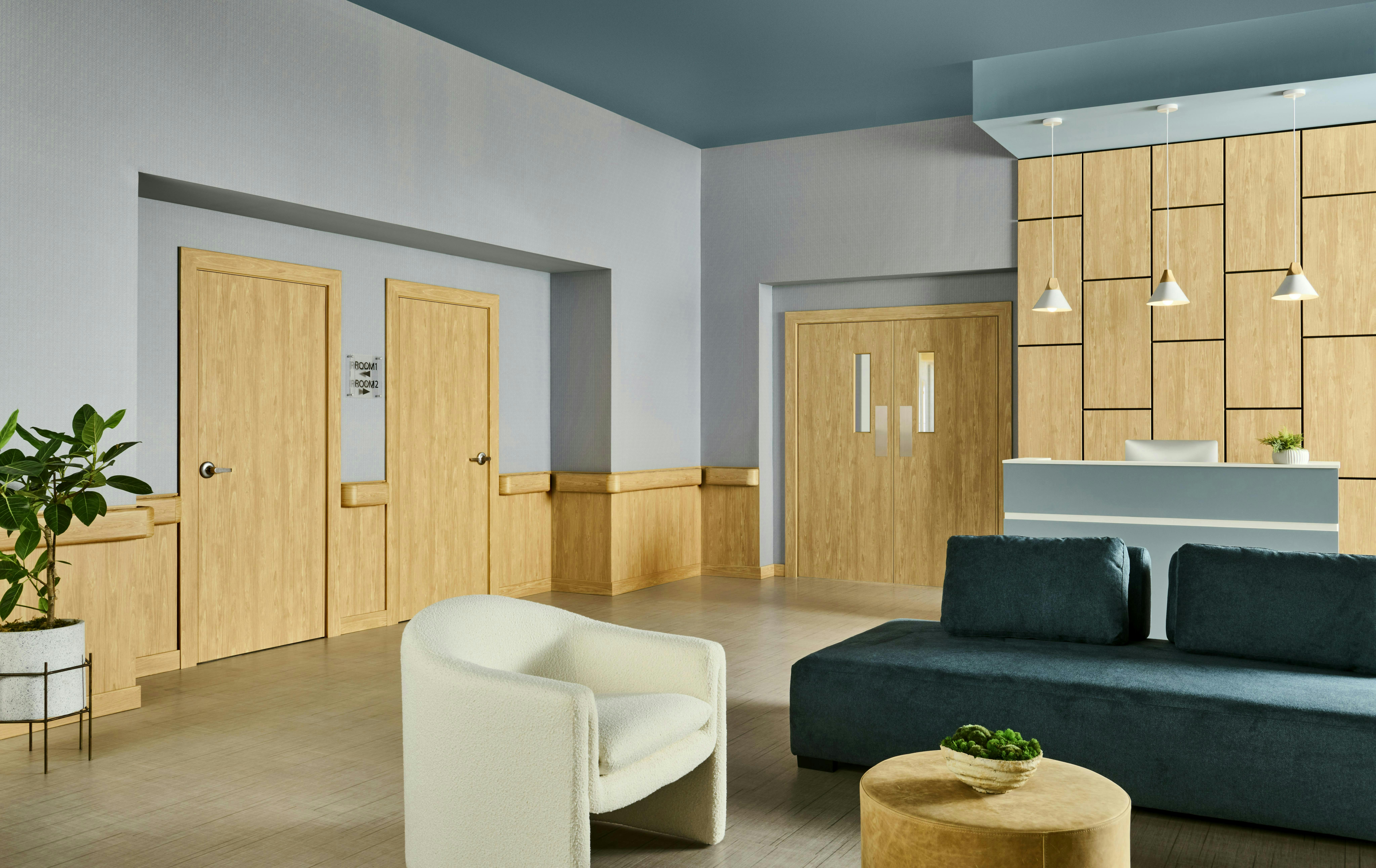
Applying Human-Centered Design Principles
To examine ways to harmonize behavioral health design with modern treatment, the team at Construction Specialties consulted with principal architect Kevin Turner of human eXperience, a firm that focuses on behavioral health facility planning, management, and design.
During our discussion, Turner explored interior space planning and design principles, considerations, and solutions to elevate safety and contribute to positive patient outcomes in individual spaces and at each risk level. The overarching goal is to promote a thoughtful, inviting, and safe patient experience.
According to Turner, the social space within a behavioral health facility is pivotal and needs to be a design focal point. He noted the first step to designing appropriate social spaces is understanding the importance of social dynamics in behavioral facilities. In fact, he countered, group spaces are even more important than the patient’s room. Therapy is based heavily on communal social interactions to the point that when entering a treatment facility, patients are given a fairly rigid itinerary with very little free time and highly encouraged social interaction for therapy.
“Inpatients need to be in social environments and are encouraged to spend minimal time in their bedroom,” Turner said. “When we are designing spaces for this patient type, it is social dynamics that drive a good therapeutic environment.”
Three Guiding Principles for Social Spaces
Turner employs three concepts for designing effective social spaces that facilitate positive interaction and adequate decompression opportunities in behavioral healthcare centers.
1. First, foster areas for spontaneity. Patients must be able to express themselves and even create alongside other patients. One method Turner suggests is to incorporate clearly marked areas of chalkboard paint, which provide opportunities for spontaneity and artistic expression in a safe, non-toxic way. An artistic outlet can help minimize feelings of frustration in an environment where the patient is under constant supervision and having forced interaction.
2. Provide havens for rest. Designing intentional spaces that create moments of pause for patients supports a healthy balance between stimulation and rest. At intensive outpatient treatment centers, for instance, designers can integrate “nooks and crannies” where patients can feel like they have a moment to themselves even within a larger group setting. Choice is an important contributor to social dynamics, as Turner elaborates below.
3. Strategize seating. Flexible seating arrangements allow patients to choose whether to be close to others or alone. Patients’ days are often scheduled by nurses and staff, so providing small choices throughout the day can bring back some of their patient dignity. “When you don’t have enough seats in a space, and everybody is forced to sit close, [maybe] you don’t want to get up or you’ll lose your seat,” which can create a level of agitation or discomfort, Turner notes. “You want people to feel like they have another choice with seating.”
About the Author
 Amy Sweeting
Amy Sweeting
Amy Sweeting is the Product Manager for Interior Product Solutions at Construction Specialties, where she drives the strategic direction and lifecycle management of innovative products for commercial interiors. With over a decade of experience at CS, Sweeting has held diverse roles giving her a unique perspective on both operational execution and customer needs.
In her current role, Sweeting partners with cross-functional teams and clients to translate market insights into solutions that enhance functionality, aesthetics, and performance in interior spaces. Her approach combines design expertise with data-driven decision-making to ensure products evolve with industry trends and customer expectations.
Sweeting earned a Bachelor of Science in Interior Design from Meredith College in Raleigh, NC, and holds a Lean Six Sigma Green Belt Certification from Rutgers University, along with an Evidence-Based Design Certification—reinforcing her commitment to creating interior environments that enhance well-being, performance, and productivity.