Future Ready by Design (Part 3): Sustain It with Mark Bryan
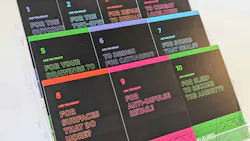




In the third and final episode of the Future Ready by Design series, host Robert Nieminen concludes his conversation with Mark Bryan, chief research and strategy officer at IIDA, about the provocative ideas emerging from IIDA’s Certified Design Futurist program and Futures Readiness Index.
Following Part 1’s focus on Prove It and Part 2’s focus on Feel It, this episode turns to Sustain It—a broader look at how design can create longer-lasting value by reducing churn across workplaces, products, retail environments, and the built environment.
Bryan discusses the rise of the two-speed workplace, where AI adoption is creating different speeds of work, decision-making, and confidence among teams. He explains why this is not only a technology or management issue, but a design challenge that requires new spaces, systems, and tools for making human judgment more visible, trackable, and transparent.
The conversation also explores how repair, refurbishment, take-back programs, deconstruction planning, and circular systems may reshape expectations for furniture and products. Bryan describes repair not only as a sustainability strategy, but as a potential community experience, service model, and new form of engagement between manufacturers, dealers, sales teams, facilities teams, and end users.
Finally, Nieminen and Bryan discuss the idea of anti-impulse retail and how physical stores may evolve as shoppers seek calmer, more curated, and more confidence-building environments. Rather than simply driving impulse purchases, future retail spaces may need to help customers verify claims, compare options, and make slower, more intentional decisions.
Together, these ideas point to a future in which design value is defined not only by what a space can prove or how it helps people feel, but by how well it supports judgment, repair, trust, and durability over time.
Meet Our Guest

Mark Bryan, Chief Research and Strategy Officer, IIDA
Mark Bryan is the Chief Research and Strategy Officer at the International Interior Design Association (IIDA), where he leads the organization’s global research, foresight, and strategic intelligence agenda. In this role, he is responsible for advancing IIDA’s future-facing initiatives and expanding the association’s capacity to deliver insight-driven strategy, thought leadership, and applied foresight for the design industry.
Mark also leads IIDA Futures, a dedicated research and foresight platform that consolidates IIDA’s work in future studies, strategic research, and scenario-based thinking. Under his leadership, IIDA Futures serves as a hub for original research, executive insights, educational programming, and the association’s Certified Design Futurist course, supporting designers, manufacturers, and allied industries as they navigate long-term change.
A designer by training and a futurist by practice, Mark brings deep experience across the built environment. Prior to joining IIDA, he served as Senior Foresight Manager at the Future Today Strategy Group, where he led foresight work across the Built Environment, Supply Chain and Logistics, Hospitality, Retail, Restaurants, and Consumer Goods sectors. His research has spanned each practice area, along with manufacturing, emerging technologies, urban systems, workplace strategy, flood mitigation, play, and the future of communities.
Earlier in his career, Mark worked as a designer, design strategist, and design researcher, advising clients that include national foundations, global consumer brands, product manufacturers, higher education institutions, healthcare systems, multifamily developers, senior living operators, and large corporate organizations. He has authored and contributed to research on workplace culture, co-living, distance learning, senior living environments, and the evolving role of design in shaping human experience.
Mark previously served as IIDA’s Futurist-in-Residence and played a central role in developing and proctoring the Certified Design Futurist program. His work sits at the intersection of design, strategy, and foresight, helping organizations anticipate change, understand uncertainty, and design more resilient, human-centered futures.
Key Moments in This Episode
Setting up Part 3: Sustain It
00:00:11 — Introducing the final episode of Future Ready by Design
Robert Nieminen opens the third and final installment of the series with IIDA’s Mark Bryan, chief research and strategy officer, and frames the episode around the theme “Sustain It.”
00:00:37 — Recapping Prove It and Feel It
Robert briefly recaps the first two episodes: Part 1 focused on measurable design value, outcomes-based design, living documentation, and post-occupancy evaluation; Part 2 explored connection, emotional regulation, catharsis, sound, sleep, comfort, and recovery.
00:01:10 — Sustainability beyond environmental responsibility
Robert introduces the episode’s broader definition of sustainability, focusing on how design can help reduce product churn, workplace churn, retail churn, and the pressure to move faster, produce more, replace sooner, and consume more.
00:02:44 — Welcoming Mark Bryan back for the final conversation
Mark returns to discuss additional insights from IIDA’s Certified Design Futurist cards and the Futures Readiness Index.
Designing against churn
00:04:20 — What does it mean to design against churn?
Robert introduces the central phrase of the episode and asks whether repair, anti-impulse retail, and the two-speed workplace share a common thread around slowing down and making more intentional choices.
00:04:42 — Choice of speed as a future design issue
Mark explains that people increasingly want and need more choice around speed: how quickly they work, how quickly they shop, and how long they keep, repair, or replace products.
The two-speed workplace
00:05:16 — AI and the two speeds of work
Mark discusses how AI is creating different speeds in the workplace, with some people using it to increase productivity while others avoid it and move more slowly.
00:05:45 — The risk of AI work slop
Mark warns that when companies force people into “AI speed,” the result can be work that looks finished but lacks depth, meaning, or substance.
00:07:27 — Why AI adoption is a design issue
Mark argues that the built environment has not yet created spaces, tools, or systems that make AI use, performance, and human judgment visible.
00:08:21 — Making judgment visible and trackable
Mark describes the opportunity to design tools and spaces that make judgment calls more transparent, helping teams document how decisions were made and why particular choices were selected.
00:09:04 — Toward a judgment timeline
Mark suggests that, just as future drawings may become conversational, teams may need a way to talk to their judgment timeline and trace the thinking behind design decisions.
00:10:50 — Designing for different speeds without rewarding one over the other
Mark explains that workplaces will need to accommodate both faster AI-enabled workflows and slower, more reflective review processes without making one feel more valuable than the other.
Human judgment as design’s differentiator
00:12:22 — Judgment as an emerging asset
Robert asks how judgment relates to the two-speed workplace and whether it becomes more valuable as production becomes faster.
00:12:48 — When production gets faster, judgment gets more valuable
Mark explains that if production becomes faster and cheaper, the scarce human value is deciding whether what has been produced is worthwhile and proving why it should be trusted.
00:13:31 — Humans still own the reputation
Mark notes that AI will not stake its name or reputation on what it produces; people still have to own the decisions, proof, and credibility behind the work.
00:14:39 — Spaces for quick iteration and slower decisions
Mark suggests future workplaces may need spaces that speed teams up during concepting and production, but slow them down when they are making consequential design decisions.
Repair, circularity, and longer product life
00:15:25 — Will repair reshape furniture expectations?
Robert shifts the conversation to furniture, product life, refurbishment, take-back, and repair as part of a broader sustainability conversation.
00:15:51 — Repair helps products stay with us longer
Mark explains that repair is becoming more important as clients, manufacturers, and consumers ask how products can be reused, maintained, and kept in service longer.
00:16:19 — Right to repair and repair cafés
Mark points to right-to-repair legislation and the growth of repair cafés as signs that repair is becoming both a practical and community-centered activity.
00:17:28 — Designing for deconstruction and reuse
Mark connects repair to the built environment more broadly, noting that some jurisdictions are requiring deconstruction plans that explain not only how something is built, but how it can be taken apart.
00:18:54 — Repair as an educational opportunity
Mark suggests that everyday repair could become a new educational offering, skill-building opportunity, and community touchpoint, especially as higher education looks for new ways to engage learners.
00:19:26 — What repair asks of manufacturers
Robert asks whether manufacturers need to move beyond durable products toward service models, documentation, parts pathways, and circular systems.
00:19:43 — Extending the product experience beyond purchase
Mark argues that manufacturers have an opportunity to create repair spaces, repair kits, documentation, and ongoing services that extend the user relationship beyond purchase and installation.
00:21:06 — A new role for sales reps
Mark suggests sales representatives could become part of the repair ecosystem by offering repair courses, classes, and CEUs, expanding the value they bring to the industry.
Anti-impulse retail and verification
00:21:28 — Rethinking impulse-driven retail
Robert introduces the card on anti-impulse retail and asks what suggests shoppers may want calmer, more curated, and more confidence-building environments.
00:21:58 — Underconsumption and no-buy challenges
Mark discusses underconsumption as a mainstream signal, including no-buy challenges and consumer efforts to slow down purchasing habits.
00:22:54 — From anti-impulse retail to verification retail
Mark explains that shoppers may be moving toward “verification retail,” researching online first and using physical spaces to confirm, compare, and experience products before buying.
00:23:14 — Automated discovery changes the role of stores
Mark notes that AI, search, and social media are increasingly shaping product discovery, which may make the tactile and trust-building role of physical retail more important.
00:24:25 — Building trust in the physical environment
Mark argues that showrooms and stores may need clearer comparisons, slower journeys, better translation of information, and easier ways for people to verify product claims.
Closing the series
00:24:56 — What should listeners take away from the series?
Robert asks Mark to reflect on the full arc of Prove It, Feel It, and Sustain It.
00:25:09 — New forms of composition, proof, and living relationships
Mark identifies key takeaways from the series, including new forms of composition, living relationships, validation, judgment, proof, and measurable human outcomes.
00:26:34 — The Index as a self-assessment tool
Mark explains that the Futures Readiness Index includes a self-assessment to help individuals and organizations understand where they stand and where they might begin building capabilities.
00:27:37 — What should designers and manufacturers ask themselves now?
Mark closes by urging firms and manufacturers to ask what they truly want to stand behind as a differentiator beyond process.
00:28:27 — Wrapping up Future Ready by Design
Robert closes the series by encouraging listeners to explore IIDA’s Futures Readiness Index and thanking Mark for helping unpack the ideas across all three episodes.
About the Author
 Robert Nieminen
Robert Nieminen
Market Content Director
Market Content Director, American School & University, Architectural Products, BUILDINGS, and interiors+sources
Robert Nieminen is the Market Content Director of four leading B2B publications serving the commercial architecture and design industries: American School & University, Architectural Products, BUILDINGS, and interiors+sources. With a career rooted in editorial excellence and a passion for storytelling, Robert oversees a diverse content portfolio that spans award-winning feature articles, strategic podcast programming, and digital media initiatives aimed at empowering design professionals, facility managers, and commercial building stakeholders.
He is the host of the I Hear Design podcast and curates the Smart Buildings Technology Report, bringing thought leadership to the forefront of innovation in built environments. Robert leads editorial and creative direction for multiple industry award programs—including the Elev8 Design Awards and Product Innovation Awards—and is a recognized voice in sustainability, smart technology integration, and forward-thinking design.
Robert's work has earned him industry-wide recognition throughout his career, including:
- ASBPE Award (2019, 2018, 2017, 2015)—Best Regularly-Contributed Column; retrofit
- TABPI Award (2017, 2016)—Top 25 Entries, Cover Story; Retail Environments
- WPA Maggie Award (2011, 2010, 2008)—Best Publication, Trade; interiors+sources
- FOLIO: Eddie Gold Award (2022, 2007)—Best Feature Article & Special Section; interiors+sources
- Contributing author of ASID’s 2020 Outlook and State of Interior Design report, as well as The State of the Interior Design Profession (Fairchild Books, 2010), which earned a place on the International Federation of Interior Architects/Designers’ “50 Must Read, Must Have” book list.