Future Ready by Design (Part 2): Feel It with Mark Bryan




In Part 2 of the Future Ready by Design series, host Robert Nieminen continues his conversation with Mark Bryan, chief research and strategy officer at IIDA, about the ideas emerging from IIDA’s Certified Design Futurist program and Futures Readiness Index.
Following Part 1’s discussion of proof, accountability, and outcomes-based design, this episode shifts into the theme Feel It: how the built environment supports the way people feel. Bryan discusses loneliness as a spatial issue and explains why simply adding lounges, shared tables, or collision zones is not enough to create meaningful connection. He also explores the need to design for purpose, programming, identity, and choice so people can show up more fully without feeling exposed or pressured.
The conversation then turns to catharsis and emotional release, asking whether future workplaces, homes, hospitality environments, and amenity spaces may need to move beyond quiet rooms and wellness spaces to support safe ways of expelling stress. Bryan also discusses sound as an active design medium, sleep as an emerging amenity, and the opportunity for designers, manufacturers, and owners to define which emotional outcomes they want their spaces and products to support.
Together, these ideas point to a future in which design value is measured not only by what a space looks like or proves, but by how well it helps people regulate, recover, connect, and feel.
Meet Our Guest

Mark Bryan, Chief Research and Strategy Officer, IIDA
Mark Bryan is the Chief Research and Strategy Officer at the International Interior Design Association (IIDA), where he leads the organization’s global research, foresight, and strategic intelligence agenda. In this role, he is responsible for advancing IIDA’s future-facing initiatives and expanding the association’s capacity to deliver insight-driven strategy, thought leadership, and applied foresight for the design industry.
Mark also leads IIDA Futures, a dedicated research and foresight platform that consolidates IIDA’s work in future studies, strategic research, and scenario-based thinking. Under his leadership, IIDA Futures serves as a hub for original research, executive insights, educational programming, and the association’s Certified Design Futurist course, supporting designers, manufacturers, and allied industries as they navigate long-term change.
A designer by training and a futurist by practice, Mark brings deep experience across the built environment. Prior to joining IIDA, he served as Senior Foresight Manager at the Future Today Strategy Group, where he led foresight work across the Built Environment, Supply Chain and Logistics, Hospitality, Retail, Restaurants, and Consumer Goods sectors. His research has spanned each practice area, along with manufacturing, emerging technologies, urban systems, workplace strategy, flood mitigation, play, and the future of communities.
Earlier in his career, Mark worked as a designer, design strategist, and design researcher, advising clients that include national foundations, global consumer brands, product manufacturers, higher education institutions, healthcare systems, multifamily developers, senior living operators, and large corporate organizations. He has authored and contributed to research on workplace culture, co-living, distance learning, senior living environments, and the evolving role of design in shaping human experience.
Mark previously served as IIDA’s Futurist-in-Residence and played a central role in developing and proctoring the Certified Design Futurist program. His work sits at the intersection of design, strategy, and foresight, helping organizations anticipate change, understand uncertainty, and design more resilient, human-centered futures.
Key Moments in This Episode
Setting up Part 2: Feel It
00:00:11 — Introducing Part 2 of Future Ready by Design
Robert Nieminen opens the episode by recapping Part 1, which focused on proof, outcomes-based design, post-occupancy evaluation, living documentation, and the idea that proof may become as valuable as the promise.
00:01:01 — Moving from “Prove It” to “Feel It”
Robert introduces the central question of the episode: If design is going to be held more accountable for outcomes, what kinds of human outcomes are designers really trying to support?
00:02:24 — Welcoming Mark Bryan back to the series
Mark Bryan returns for Part 2, and Robert sets up the conversation around designing not just for occupants or users, but for human beings with real feelings and nervous systems.
Loneliness as a spatial issue
00:03:30 — Can design combat loneliness?
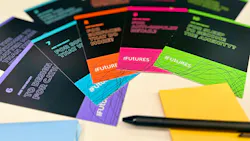
Robert introduces one of the provocative Certified Design Futurist cards: Are we ready to combat loneliness with design?
00:03:48 — Why loneliness belongs in the design conversation
Mark explains why loneliness emerged as a major signal in IIDA’s Futures Readiness Index and argues that, if common design responses such as lounges and collision zones were enough, the built environment would have solved the problem already.
00:05:30 — Designing places where people can linger
Mark discusses healthcare’s growing interest in prescribing social connection and suggests that design still lacks spaces that can truly support meaningful, lingering connection.
00:07:04 — Connection requires purpose and programming
Mark explains that simply creating a lobby, amenity space, or shared area is not enough. Designers need to consider the purpose, programming, and reasons people would return to a space.
00:09:08 — Creating space for contribution and identity
Mark explores how spaces can invite people to contribute, share identity, and connect without forcing direct interaction, using interactive artwork as an example of unspoken storytelling.
Designing for catharsis
00:10:16 — Are designers ready to design for catharsis?
Robert introduces the idea of catharsis as something deeper than calm, wellness, or restoration.
00:10:38 — Why calm may not be enough
Mark explains that many existing wellness interventions assume people can become calm without first releasing anxiety, stress, or emotional intensity.
00:11:50 — Scream clubs, rage rooms, and emotional release
Mark points to examples such as outdoor scream clubs and rage rooms as signals that people are seeking places to release stress in ways the built environment has not yet fully accommodated.
00:12:58 — Beyond the quiet room
Mark suggests that future spaces may need to include “stress expressive spaces,” where people can release energy and reset their nervous systems in a safe, cathartic way.
00:14:02 — Designing for the feeling of exhale
Mark reflects on the familiar experience of leaving a stressful environment and sitting in a car to decompress, arguing that this sense of safe release is often missing from designed spaces.
00:15:02 — Avoiding stigma in emotional reset spaces
Mark discusses the importance of education, change management, choice, privacy, and acoustic control so emotional reset spaces do not feel clinical, performative, or stigmatizing.
Sound as an active design medium
00:16:59 — Acoustics as more than noise control
Robert shifts the conversation to sound as an active design tool, not merely an afterthought or a way to dampen noise.
00:17:22 — Sound as a tool for privacy, trust, and healing
Mark explains that sound is becoming a design medium that can support privacy, trust, cognition, and even physical, mental, and emotional healing.
00:18:45 — Directed sound and audible enclaves
Mark discusses emerging research into targeted sound experiences, including audible enclaves that could allow one person in a crowd to hear a message privately.
00:19:31 — Soundscapes that help the body recover
Mark describes soundscapes that could be adapted to different healing needs, helping calm the nervous system and support regeneration.
00:21:42 — Has sound been underdeveloped in interiors?
Robert asks whether sound has been overlooked compared with visual elements such as color, materiality, and light.
00:21:59 — Designing sound as part of the experience
Mark argues that design has often focused on negating sound, but future spaces may need to let people choose and shape sound as part of the emotional experience.
Sleep, rest, and recovery
00:23:12 — Is sleep becoming an amenity?
Robert introduces the card focused on sleep and asks whether rest may become a design expectation beyond hospitality.
00:23:50 — Preparing the body for sleep
Mark explains that sleep is not only about the bed. It is also about how homes, workplaces, learning environments, and healing environments prepare the body for rest and recovery.
00:24:36 — Beyond circadian lighting
Mark asks what else design can do, beyond lighting, to help regulate the nervous system and support better sleep.
00:26:05 — Wearables, sleep patterns, and responsive environments
Mark discusses emerging technologies that can track sleep patterns and adjust air, sound, or other room conditions to help people sleep better.
Emotional outcomes and future-ready practice
00:26:57 — Do designers need to understand the nervous system?
Robert asks whether designers will need a stronger understanding of the human body and nervous system to design well in the future.
00:27:13 — Designing for specific emotional outcomes
Mark argues that designers do not need to do everything, but they should be able to state which emotional outcomes they want to create and develop focused understanding around them.
00:28:38 — What designers, manufacturers, and owners can do now
Mark recommends beginning with values: deciding which human emotions or emotional states a brand, firm, or organization truly wants to support.
00:30:00 — The emotional states design has not yet covered well
Mark closes by noting that many of the emotional states designers have not yet addressed well are also some of humanity’s biggest current challenges.
00:30:33 — The need for pilots and experimentation
Mark encourages the industry to pilot new ideas, accept failure, and return to experimentation as a way to learn what future-ready design can become.
Looking ahead
00:31:01 — Previewing Part 3: Sustain It
Robert previews the final episode, which will explore how future-ready design may require less churn, less replacement, less impulse, and less speed.
About the Author
 Robert Nieminen
Robert Nieminen
Market Content Director
Market Content Director, American School & University, Architectural Products, BUILDINGS, and interiors+sources
Robert Nieminen is the Market Content Director of four leading B2B publications serving the commercial architecture and design industries: American School & University, Architectural Products, BUILDINGS, and interiors+sources. With a career rooted in editorial excellence and a passion for storytelling, Robert oversees a diverse content portfolio that spans award-winning feature articles, strategic podcast programming, and digital media initiatives aimed at empowering design professionals, facility managers, and commercial building stakeholders.
He is the host of the I Hear Design podcast and curates the Smart Buildings Technology Report, bringing thought leadership to the forefront of innovation in built environments. Robert leads editorial and creative direction for multiple industry award programs—including the Elev8 Design Awards and Product Innovation Awards—and is a recognized voice in sustainability, smart technology integration, and forward-thinking design.
Robert's work has earned him industry-wide recognition throughout his career, including:
- ASBPE Award (2019, 2018, 2017, 2015)—Best Regularly-Contributed Column; retrofit
- TABPI Award (2017, 2016)—Top 25 Entries, Cover Story; Retail Environments
- WPA Maggie Award (2011, 2010, 2008)—Best Publication, Trade; interiors+sources
- FOLIO: Eddie Gold Award (2022, 2007)—Best Feature Article & Special Section; interiors+sources
- Contributing author of ASID’s 2020 Outlook and State of Interior Design report, as well as The State of the Interior Design Profession (Fairchild Books, 2010), which earned a place on the International Federation of Interior Architects/Designers’ “50 Must Read, Must Have” book list.