How Designers Turned a Year of Constraints Into a Catalyst for Change
Key Highlights
- Constraints became strategy—designers used pressure points to spark smarter, more intentional solutions.
- Where are the gaps, and who feels them? This question shaped more inclusive, community-minded design all year.
- Creative integrity matters more than ever as the industry balances new tools with curiosity and human judgment.
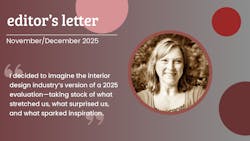
At the end of another year, one thing on my mind is our upcoming employee self-evaluations. I’ve never been a fan of them (I know, shocking), and reflecting on my own work never feels as objective as the forms pretend it should be. So this year, I decided to ease into it by imagining the interior design industry’s version of a 2025 evaluation—taking stock of what stretched us, what surprised us, and what sparked inspiration.
According to resources like ASID’s annual Trend and Economic Outlook reports, trade, labor, and policy shifts continued to push cost pressures across project types. New construction slowed in consumer-driven sectors such as retail, hospitality, and entertainment, while renovations and conversions emerged as areas of opportunity heading into 2025 and 2026. None of this is unfamiliar terrain for designers, but it did demand a steady hand and a willingness to rethink long-standing assumptions.
Designers are leaning into discovery, embracing experimentation, and keeping the A&D community in a state of meaningful evolution.
And that’s where the industry showed its strength: turning constraints into strategy. In this issue’s Guest column, Vocon design director Saemi Lee urges a cost-first approach to commercial office projects—one that treats value engineering not as a late-stage burden but as a proactive way to focus on finish-intensive zones and build a more sustainable procurement path. Gensler’s Brandon Larcom echoes this mindset in our Interview, emphasizing features that promote efficiency, adaptability, and stronger connections between people and place. The 2025 interiors+sources Product Innovation Awards winners demonstrate where that thinking leads: manufacturers creating smarter, more responsive products by listening closely to designers and their clients.
During events throughout the year—from Hospitality Design Expo to NeoCon to EdSpaces—we heard similar calls for more integrated, inclusive approaches to design. Leaders urged the industry to pay closer attention to the gaps in an experience: who they affect, how they ripple outward into communities, and how thoughtful design can expand wellbeing, access, and opportunity for all. Our People’s Choice Projects illustrate exactly how those questions translate into powerful outcomes that resonated through our readership.
Another challenge the industry continues to face as a collective is maintaining creative integrity and curiosity while navigating new tools, deepening research, and applying cross-disciplinary insights across health, sustainability, and equity. But after speaking with several influential design minds for this issue’s feature on mentorship, I’m convinced the field is more than equipped. Designers are leaning into discovery, embracing experimentation, and keeping the A&D community in a state of meaningful evolution.
We’ve seen what good design can achieve—even in seasons defined by change and constraint. Here’s to carrying that clarity, creativity, and momentum forward into the year ahead.
About the Author
 Carrie Meadows
Carrie Meadows
Head of Content
Carrie Meadows is Head of Content for interiors+sources, where she leads editorial strategy, content development, and brand storytelling focused on the people, projects, and innovations shaping the design industry. With more than two decades of experience in B2B media, she has built a career connecting technical expertise with creative insight—translating complex topics into meaningful stories for professional audiences.
Before joining interiors+sources in 2024, Carrie served as Editor-in-Chief of LEDs Magazine within Endeavor Business Media’s Digital Infrastructure & Lighting Group, guiding coverage of emerging lighting technologies, sustainability, and human-centric design. Her earlier editorial experience spans across Laser Focus World, Vision Systems Design, Lightwave, and CleanRooms, where she managed print and digital publications serving the optics, photonics, and semiconductor sectors.
An advocate for clear communication and thoughtful storytelling, Carrie combines her editorial management, SEO, and content strategy expertise to help brands and readers stay informed in a rapidly evolving media landscape. When she’s not crafting content, Carrie can be found volunteering at a local animal shelter, diving into a good crime novel, or spending time outdoors with family, friends, and her favorite four-legged friends.