Amber Grace Community Designs Supportive Housing Around Belonging
Key Design Moves
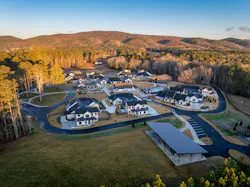
- Organized eight residences around a village green to encourage walkability, visibility, and casual connection.
- Paired homes with shared courtyards to create a neighborhood feel rather than an institutional setting.
- Planned private rooms around central shared living spaces to balance independence, oversight, and family-style community.
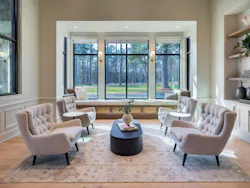
- Used muted tones, soft textures, and natural materials to support a peaceful, sensory-appropriate residential environment.

At Berry College in Rome, Georgia, the newly completed Amber Grace Community offers a purpose-built residential model for adults with intellectual and developmental disabilities (IDD), a population that continues to be underserved by many traditional housing and post-secondary support systems. Designed by Cooper Carry, based on a preliminary concept by Reach Architects, the 10-acre community includes eight residences for up to 48 adults, arranged around a shared village green.
Designing Supportive Housing as a Neighborhood
Amber Grace, a faith-based nonprofit founded by David and Debbie Turner, was created in response to a deeply personal and widely shared need: What happens after secondary school, when adults with developmental disabilities need more than housing alone? The project’s objective was to create a safe, supportive, and enriching place where residents could build independence, contribute to community life, and form lasting social connections.
“The IDD community is one of the most underserved populations, and there is a lack of social infrastructure that supports these individuals and allows them to establish meaningful connections with others,” said Tim Fish, principal at Cooper Carry. With Amber Grace, he added, “the end goal was to design an engaging and authentic built environment where human bonds are fostered and encouraged.”
Planning for Connection, Privacy, and Independence
That goal shaped the project as a neighborhood rather than an institution. The village green serves as the community’s center of activity, encouraging walkability, visibility, and everyday interaction. Pathways connect residences, gathering spaces, and shared amenities, creating opportunities for casual encounters while helping residents navigate the campus with confidence. The homes are paired to create shared courtyards, reinforcing a residential rhythm and giving neighbors additional places to connect.
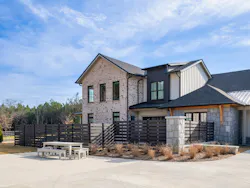
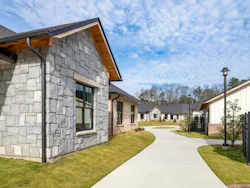
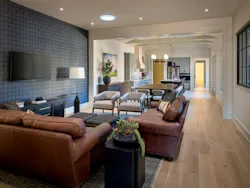
Inside each home, six residents have individual apartments or rooms that open into central shared living areas. That planning strategy supports both independence and oversight: Residents maintain private space while remaining visually and socially connected to a family-style common area. Each home also includes a Support Family, providing guidance and reinforcement within a setting that feels domestic, not clinical.
Interior Design Choices That Support Belonging
The interiors extend that balance of support and autonomy. While each home has its own character, the overall aesthetic is intentionally peaceful and restorative, using muted tones, soft textures, and natural materials selected to be sensorily appropriate. Those choices matter in a community designed for adults with intellectual and developmental disabilities, where comfort, predictability, and a reduced sense of overwhelm can help residents feel grounded and at home.
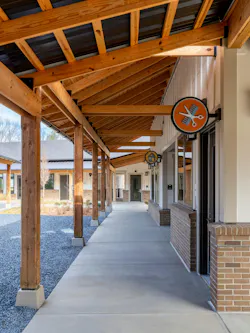
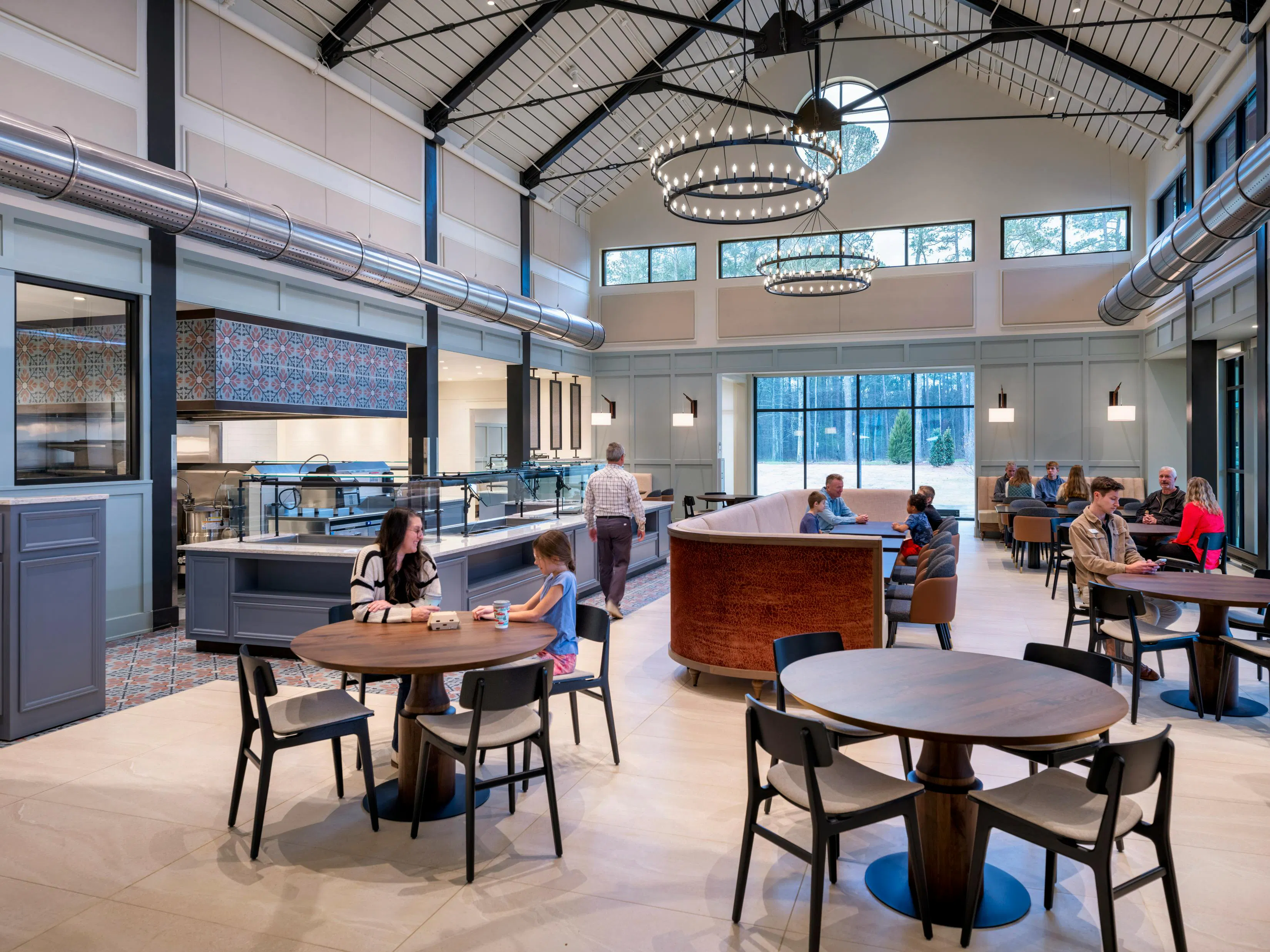
The community center expands the project’s role beyond residential living. Dining facilities, classrooms, art spaces, indoor and outdoor fitness and recreation areas, healthcare, and a cosmetology studio support daily life, social connection, practical learning, and personal care. These amenities position Amber Grace as a long-term community rather than a transitional program, with spaces intended to support residents as they age in place.
“This was a heartfelt effort from every partner involved,” said Debbie Turner, co-founder of Amber Grace Community at Berry College, adding that the community is intended to serve as “a blueprint for other programs supporting adults with intellectual disabilities.”
For commercial and contract designers, Amber Grace offers a clear lesson: Inclusive design is not only about access or compliance. It can also be expressed through site planning, adjacencies, sensory cues, residential-scale finishes, and spaces that make connection feel natural. By designing for both safety and self-direction, Cooper Carry created a community that supports belonging without sacrificing independence.
Announcement has been edited for length and clarity, with additional design details by Carrie Meadows.
Editor’s Take: Impact and Design Significance
Admittedly, when I have seen or heard the phrase “supportive housing,” my thoughts have typically leaned toward senior living and care communities or multi-family public housing. Cooper Carry’s project brief for Amber Grace Community stopped me short, revealing my own lack of awareness around supportive villages designed for adults with intellectual and developmental disabilities,
Located at Berry College, Amber Grace balances the dignity of independent living with practical safety, offering an inspiring case study in intentional design that builds community. As Cooper Carry principal Tim Fish explained in the firm’s announcement, the team’s highest purpose was to create that would empower residents “to take charge of their independence and live life abundantly.”
That purpose comes through in the project’s careful attention to physical and visual connections. Pedestrian pathways draw residents toward the village green and a welcoming community center, where classrooms support life skills, employment counseling, and service opportunity programming. Residences and amenity spaces are planned for easy navigation and intuitive gathering, while lighting, surfaces, furnishings, and textiles create a sense of comfort.
For an underserved population seeking both autonomy and social connection, Amber Grace Community delivers a warm, dignified model of supportive living.—Carrie Meadows