Rawlings Experience Center in St. Louis Blends Retail Design with Baseball-inspired Storytelling
Key Design Highlights
- Brand heritage translated into a more immersive retail journey
- Ballpark-inspired cues expressed through lighting, materials, and display
- A two-level layout designed around storytelling and interaction
- Behind-the-scenes solutions that support visibility, acoustics, and flow
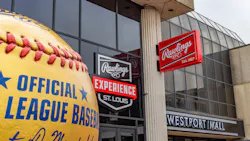
Rawlings Sporting Goods has opened a new Experience Center and corporate headquarters at Westport Plaza in St. Louis, with architectural and interior design by Oculus Inc. The project pairs a two-story, 14,000-square-foot retail environment with a 37,000-square-foot office, both designed around the company’s longstanding connection to baseball and softball.
Developed in tandem, the retail and workplace spaces express different facets of the same brand story. In the office, Oculus drew on the atmosphere of a day at the ballpark through color and finish selections intended to support collaboration and flexibility. In the retail environment, that narrative becomes more experiential, using display, lighting, materiality, and interactive moments to connect customers with Rawlings’ heritage and craftsmanship.
A Customer Journey Shaped by Baseball History
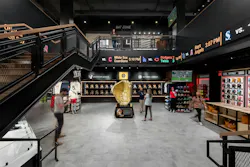
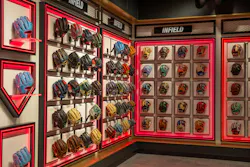
The experience begins before visitors enter the store. An oversized baseball sculpture outside the storefront signals the theme beyond the glass, while an interactive timeline near the entry introduces key milestones in Rawlings’ history and moments in baseball more broadly. From there, visitors move into the main sales floor, where nearly 200 gloves are displayed across illuminated walls and a Gold Glove Award statue anchors the central showroom.
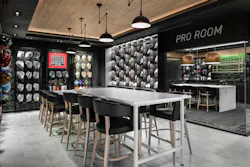
The layout helps guide that progression. Oculus created a 26x26-foot opening between levels and added a grand staircase to strengthen visual connections across the store and emphasize the vertical volume of the space. On the lower level, the Glove Vault, Pro Room, and Custom Shop extend the experience beyond product display, giving visitors access to glove history, fittings, and personalized design. Upstairs, a bat display and testing area continues that sequence with additional merchandise and hands-on engagement.
Translating the Game into Physical Cues
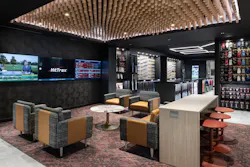
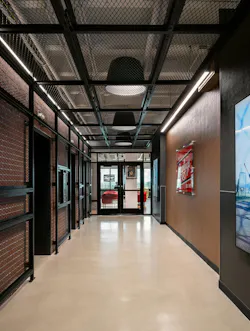
Rather than relying on graphics alone, the project uses architectural and interior details to evoke the atmosphere of a nighttime ballgame. Ribbon-style LED scoreboards wrap the second level, while dark wall finishes, industrial black grates, polished concrete, and stadium-inspired lighting help establish the setting. Red and white accents nod both to Rawlings’ brand identity and to the leather and stitching of a baseball.
That design language continues through the store’s fixtures and display elements. Custom cases showcase memorabilia and artifacts, while bat-adorned handles, mounted bases and helmets, and lighting features incorporating wooden bats extend the brand story through smaller details. Together, those moves help carry Rawlings’ legacy into the physical environment without separating product merchandising from storytelling.
Designing for Immersion and Operations
Several behind-the-scenes design moves also supported the customer experience. According to Oculus, the team expanded the storefront, addressed an exterior-to-interior height difference, and rerouted ductwork to preserve cleaner sightlines in key merchandising and lounge areas. In the Hit Lab batting cage, sound insulation, acoustic treatments, and astroturf contribute to both performance and atmosphere.
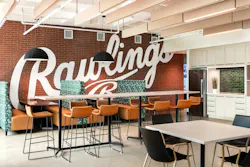
The project also incorporated a handful of sustainability-minded strategies, though it was not submitted for third-party certification. Oculus said the space includes energy-efficient LED lighting, bamboo wood panel materials, and repurposed Rawlings products used as design elements. The team also recycled kitchen exhaust components removed from the previous tenant, helping to keep them out of a landfill.
Taken together, the Rawlings Experience shows how retail design can use circulation, display, and material cues to make a brand’s history more spatial and participatory. Instead of treating storytelling as an overlay, the project builds it into the visitor journey itself.
*Announcement has been edited for length and clarity.