Desert Design Strategies Define Sahuarita Regional Library
Key Design Moves
- Amenities include study and meeting rooms, a maker space, a gaming center, and a business development area.
- Finishes exude warmth while maintaining durability.
- Artwork and graphic elements reinforce the library’s local identity and create visual engagement opportunities.
- Universal accessibility is key. The design exceeds ADA requirements.
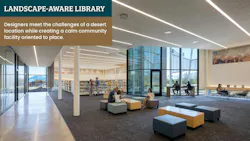
For the design team behind the Sahuarita Regional Library in Sahuarita, Arizona, the desert location wasn’t just a challenge—it was an opportunity.
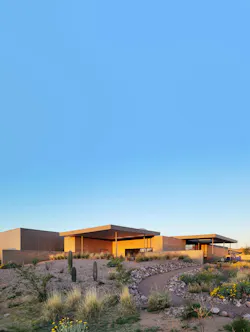
The library design focuses on the immediate desert landscape due to the building’s limited long-range views, with a continuous low ribbon window that frames earth berms and bioswales planted with native vegetation and irrigated with harvested rainwater. The berms buffer noise from the adjacent street, reinforcing a calm interior environment.

Inside, this essential civic resource offers collection areas for children, teens, and adults, plus study and meeting rooms, a maker space, a gaming center, and a business development area that encourages collaboration and job skill development.
Read on for more design details that earned this civic building recognition from BUILDINGS and Building Design+Construction as part of the annual Elev8 Design Awards.
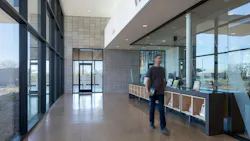
The interior finishes balance durability with warmth, incorporating wood surfaces, textured wall treatments, and acoustic panels that enhance comfort and spatial richness. Integrated artwork and graphic elements reference the library’s local identity and create moments of visual engagement throughout the building.
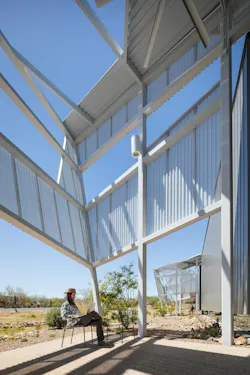
Shaded outdoor gathering spaces, reading patios, and shaded entry areas create a gradual transition between indoors and outdoors and extend the library use into the landscape.
Smart Strategies for Civic Destinations
The Sahuarita Regional Library incorporates best practices that help it strengthen civic life in its area.
Attention to functionality and accessibility. Universal accessibility is key to the design, according to the design team at Line and Space. The library exceeds ADA requirements through generous circulation widths, step-free access throughout, clear wayfinding, and inclusive restroom and service facilities.
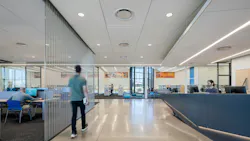
Program spaces accommodate users of all ages and abilities, and a deliberate balance of quiet zones, collaborative areas, and technology-rich spaces allow users to choose the environment that best supports their individual needs and learning styles.
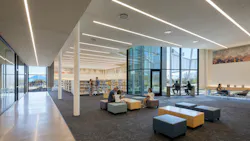
A strong commitment to sustainability. The library utilizes passive strategies like optimized orientation, deep overhangs, shading systems, high-performance glazing, and thermal mass to reduce cooling loads—an important consideration for designs in the desert climate. Native and drought-tolerant landscaping minimizes irrigation demand. Material selections prioritize durability, reduced maintenance, and long-term lifecycle performance.
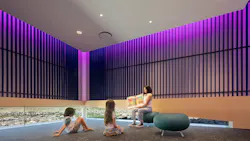
A design that embeds occupant health and well-being throughout. The design features abundant daylight, visual connections to the landscape, high indoor air quality, acoustic comfort, and access to outdoor spaces—all of which support physical and mental wellness. A calm material palette and clear spatial organization foster a sense of safety, focus, and belonging, reinforcing the library’s role as a restorative and inclusive civic environment.
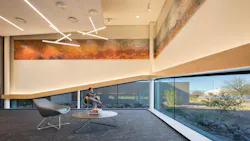
Deeply grounded in its desert context, the Sahuarita Regional Library isn’t just a repository for books—it’s a community living room, technology hub, and inclusive gathering space that supports lifelong learning across generations.
This article was developed from Line and Space, LLC’s submission to the 2026 BUILDINGS and Building Design + Construction Elev8 Design Awards program. Edited by Janelle Penny, BUILDINGS head of content and contributing writer for interiors+sources.