Foundations of Community (Pt. 1): Affordable Multifamily Housing with Peter Bafitis and Alex Brito
Key Highlights
- Affordable housing faces challenges beyond supply and demand, including zoning, financing, and approval processes that increase costs and complexity.
- Designing affordable housing with the same care as market-rate projects ensures durability, timelessness, and dignity for residents.
- Architects are increasingly acting as advocates, engaging communities and policymakers to foster supportive environments for affordable housing.
- Policy shifts like City of Yes and streamlined approvals are beginning to facilitate more affordable housing development in New York City.
- Innovative design strategies, including energy efficiency and careful layout, help stretch budgets while maintaining quality and livability.
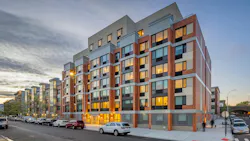




Editor’s note, July 13, 2026: Since this episode was recorded, the AIA celebrated the passage of the bipartisan 21st Century ROAD to Housing Act which was signed into law on July 11, 2026. The legislation includes measures intended to expand housing production, support adaptive reuse, modernize federal housing programs, increase multifamily lending limits, and reduce barriers that can delay development. Its passage reinforces a central theme of this conversation: Good design is essential to creating dignified, resilient, and livable housing, but solving the affordability crisis also requires changes to the policies, financing systems, and development processes that determine whether housing gets built.
Affordable multifamily housing is one of the most urgent design and development challenges in the U.S., but the reasons it remains so difficult to build go far beyond simple supply and demand. In this episode of I Hear Design, Robert Nieminen speaks with Peter Bafitis, managing principal at RKTB Architects, and Alex Brito, principal and leader of the firm’s affordable housing studio, about the forces shaping the housing crisis today—from approvals, zoning, financing, and public-private partnerships to construction costs, sustainability mandates, and the realities of building in New York City.
The conversation also explores a larger idea: affordable housing as community infrastructure, not just real estate. Peter and Alex discuss why good affordable housing should be designed with the same care and dignity as market-rate housing, how durability and timelessness matter in projects meant to serve neighborhoods for decades, where office-to-residential conversions genuinely make sense, and why smaller “missing middle” projects may be just as important as large-scale developments in addressing the shortage. This episode is the first in the three-part series Designing the Foundations of Community.
Meet Our Guests
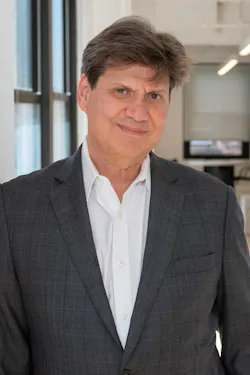
Peter Bafitis, AIA, President, Managing Principal, RKTB Architects
Peter Bafitis, AIA, has over thirty years of experience in the design and construction of a diverse range of projects including multifamily housing, schools, hospitals, transportation projects, adaptive reuse, and large scale urban design work. This experience has been concentrated in the New York metropolitan area but has also included work in Washington, DC and Florida as well as international work in Japan and Nigeria. Mr. Bafitis has focused his career on strengthening the urban environment by reinforcing the social institutions that sustain it, centering his efforts on neighborhood preservation achieved most prominently through the design and integration of affordable housing, K-12 schools, and transportation facilities. As managing principal at RKTB since 2004, Mr. Bafitis has been responsible for building design, new project development, and overall company management. Since joining the firm in 1995 he has directed some of RKTB’s largest projects for both public and private clients, advancing the firm’s already recognized expertise in multifamily housing and adaptive re-use. He has been especially instrumental in bolstering the firm’s commitment to public sector work which has included extensive experience with many New York City and State agencies.

Alex Brito, AIA, Principal, RKTB Architects
Alex Brito, AIA, NOMA, is a registered architect in New York State with design, production and project management experience in a variety of sectors. An alumnus of The City College of New York School of Architecture and Environmental Studies, he joined RKTB in 1992 and was promoted to Associate in 2003, Senior Associate in 2007 and Associate Principal in 2014. He was named a partner in 2015. Brito has worked extensively on pre-design phases of projects such as zoning analyses and NYC building code analyses. Project types include affordable, supportive and market-rate multi-family housing; transportation; civic and cultural; and educational. Major projects he has managed include East Clarke Place Court, Salem House, Site 8 Apartments, Cathedral Gardens, Anchor House for Women, P.S.29Q, and The AirTrain terminal in Jamaica, Queens. Brito is a member of the AIANY Housing Committee and is also a board member of the Citizens Housing & Planning Council (CHPC).
Key Moments in This Episode
00:00:12 — Launching “Designing the Foundations of Community”
Robert introduces the two-part series and frames this episode around affordable multifamily housing, the housing shortage, and the role design can still play in improving people’s lives.
00:02:18 — Meet Peter Bafitis and Alex Brito of RKTB
Peter and Alex introduce themselves, explain their long history with RKTB, and describe the firm’s legacy in housing design in New York City.
00:03:16 — What people still misunderstand about the housing crisis
Peter argues that many people see only high prices, not the deeper structural causes behind them: supply constraints, finance, land values, and the difficulty of building quickly and affordably. Alex adds that the approvals process itself is a major source of cost and complexity.
00:05:13 — Why affordable housing is so difficult to deliver
The conversation turns to the layers of friction shaping multifamily development today, including cautious lenders after 2008, rising costs, zoning, land values, transportation, and diminished public investment.
00:08:14 — Architects as advocates, not just designers
Peter reflects on how the architect’s role has evolved from pure building design to advocacy, coalition-building, and helping communities and governments buy into a project. Alex discusses how resident engagement now shapes rehab and preservation work more directly.
00:11:04 — Why affordable housing should not look “affordable”
Peter and Alex explain how affordable housing design has changed over the decades and why they believe these buildings should be designed with the same care, quality, and dignity as market-rate developments.
00:13:26 — The difference between market-rate and affordable multifamily
Peter and Alex discuss what makes affordable housing distinct: it must be durable, timeless, and built for long-term use, not short-cycle upgrades or passing design trends.
00:16:13 — Treating housing like essential infrastructure
The episode moves into a broader civic argument as Peter describes housing as a fundamental right and a foundational public necessity, comparable to water or electricity. Alex reinforces the idea by framing shelter as one of the essential pillars of human life.
00:18:47 — Signs of policy change in New York City
Peter and Alex point to recent policy shifts, including City of Yes and city charter changes, as evidence that governments are beginning to streamline approvals and encourage more housing production.
00:20:11 — Designing for dignity on tight budgets
Alex explains how RKTB stretches every dollar through careful unit layouts, balanced daylight strategies, and durable materials. Peter adds that good livability comes from getting the fundamentals right: layout, street response, and being a good neighbor.
00:23:14 — The cost-cutting moves that hurt projects most
The guests discuss common mistakes in affordable housing when budgets tighten, especially swapping out durable exterior materials and stripping away landscape or amenity elements that contribute to long-term quality.
00:26:02 — Why affordable housing is now at the leading edge of sustainability
Peter and Alex describe how energy code requirements and public financing expectations are pushing affordable housing toward all-electric, high-performance design, with benefits for both owners and residents over time.
00:29:38 — Where conversions make sense, and where they are oversold
Peter argues that office-to-residential conversion is useful but often overhyped. He and Alex explain why building depth, floor plates, access to light, and construction era all determine whether a conversion is practical—or prohibitively expensive.
00:34:51 — What policy changes would make the biggest difference
The guests highlight the need for more funding, streamlined approvals, less bureaucracy, and stronger public-sector commitment if affordable housing is to be built at the scale the crisis demands.
00:38:25 — What good design can and cannot solve
Peter explains how thoughtful multifamily design can improve neighborhoods, safety, and daily experience, but also argues that solving the crisis will require a large number of smaller projects—not just a few big developments.
00:42:40 — The opportunity in the “missing middle”
Alex and Peter close on a note of cautious optimism, pointing to clusters of small-lot housing, missing-middle strategies, creative site solutions, conversions, and policy momentum as reasons they believe more housing can get built.
About the Author
 Robert Nieminen
Robert Nieminen
Market Content Director
Market Content Director, American School & University, Architectural Products, BUILDINGS, and interiors+sources
Robert Nieminen is the Market Content Director of four leading B2B publications serving the commercial architecture and design industries: American School & University, Architectural Products, BUILDINGS, and interiors+sources. With a career rooted in editorial excellence and a passion for storytelling, Robert oversees a diverse content portfolio that spans award-winning feature articles, strategic podcast programming, and digital media initiatives aimed at empowering design professionals, facility managers, and commercial building stakeholders.
He is the host of the I Hear Design podcast and curates the Smart Buildings Technology Report, bringing thought leadership to the forefront of innovation in built environments. Robert leads editorial and creative direction for multiple industry award programs—including the Elev8 Design Awards and Product Innovation Awards—and is a recognized voice in sustainability, smart technology integration, and forward-thinking design.
Robert's work has earned him industry-wide recognition throughout his career, including:
- ASBPE Award (2019, 2018, 2017, 2015)—Best Regularly-Contributed Column; retrofit
- TABPI Award (2017, 2016)—Top 25 Entries, Cover Story; Retail Environments
- WPA Maggie Award (2011, 2010, 2008)—Best Publication, Trade; interiors+sources
- FOLIO: Eddie Gold Award (2022, 2007)—Best Feature Article & Special Section; interiors+sources
- Contributing author of ASID’s 2020 Outlook and State of Interior Design report, as well as The State of the Interior Design Profession (Fairchild Books, 2010), which earned a place on the International Federation of Interior Architects/Designers’ “50 Must Read, Must Have” book list.