How Mixed-Use Design Becomes More Livable
4 Takeaways for Designing Mixed-Use That Lasts
- Design for how people actually move through a property, not just how uses are arranged on a plan.
- Reworking overlooked or transitional areas can unlock some of the most useful amenity space in a project.
- Mixed-use feels stronger when retail, residential, and shared spaces read as one experience.
- Long-term value comes from spaces that are flexible, durable, and easy to return to every day.
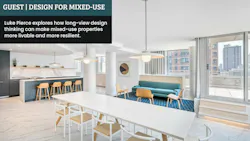
Mixed-use properties are often described by their components: residential above, retail below, amenities throughout. But from my perspective, the most successful projects are not the ones with the longest list of uses. They are the ones that feel intuitive, connected, and genuinely aligned with how people live.
That has been one of the clearest lessons from our work at The Dermot Company. What makes a mixed-use environment both livable and commercially successful is not complexity for its own sake. It is the ability to support everyday routines, create a sense of cohesion, and adapt over time as resident needs change.
For architects and interior designers, I think that means looking beyond the standard amenity checklist. The best mixed-use environments are shaped by performance, flexibility, and the experience of moving through a property day after day.
Designing for Real Life, Not Just the Plan
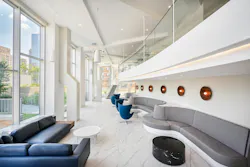
In my experience, when a space is underused, the issue is rarely the square footage itself. More often, it is a mismatch between what was built and how residents actually want to use it. Oversized single-purpose rooms, leftover transitional areas, and isolated amenity spaces may make sense on paper, but they do not always hold up in everyday life.
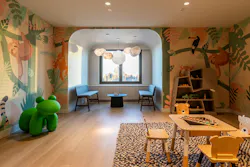
That is where I see real opportunity. At Dermot, we have found value in rethinking those spaces around day-to-day behavior and building in flexibility from the start. In practical terms, that has meant converting a basketball court into functional fitness space, a golf simulator into a yoga studio, a workshop into coworking, and a former leasing office and spin room into a children’s play area. We have applied the same thinking to rooftops and even mechanical areas, transforming them into roof decks and lounges that residents actually use.
For designers, the takeaway is an important one: mixed-use environments cannot be too rigid. Spaces need enough definition to serve a purpose today, but enough adaptability to remain useful tomorrow.
One Property, One Experience
I have also found that mixed-use projects can quickly feel fragmented when residential, retail, and lifestyle offerings are treated as separate parts rather than as a whole. The properties that feel the most natural are the ones designed as a single experience.
That sense of cohesion often begins with the physical language of the project. A consistent palette, materials, and signage can create continuity while still respecting the identity of the building and the character of the surrounding neighborhood. When those elements align, transitions between uses feel far more seamless.
I also think retail and lifestyle offerings need to be integrated into residents’ routines rather than simply placed nearby. At 20 Exchange Place, for example, residents effectively have private access from the building lobby to what is otherwise a public café. That makes the café feel less like a separate destination and more like a natural extension of daily life. We reinforce that connection through Dermot Ignite, our resident lifestyle platform, which links residents to curated events, programming, and partner benefits while also working directly with retail tenants.
When design and use support one another in that way, a mixed-use property starts to feel less like a collection of components and more like a place with its own rhythm and identity.
The Spaces Residents Use Again and Again
The amenities that perform best are not necessarily the flashiest ones. In my view, they are the spaces residents return to consistently because they support the realities of how people live, work, gather, and recharge.
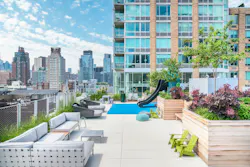
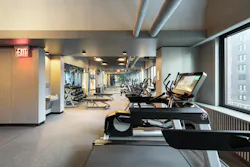
In urban settings, that has meant prioritizing well-designed fitness spaces, flexible work areas, and shared environments that can support both everyday use and social connection. Fitness centers remain a core focus, but they need to support a broader range of activity than they once did, from strength training and functional fitness to wellness-oriented uses more broadly.
Work-from-home has also reshaped expectations. Coworking is no longer a bonus feature; in many properties, it has become part of the baseline. At 20 Exchange Place, we are building out coworking spaces to meet that demand. At 21 West End Avenue, we converted an underutilized workshop into coworking. At The Landon, we added private workstations and conference rooms to support more focused work.
The same principle applies to lounges, rooftops, and outdoor areas. These spaces perform best when they can support both habitual daily use and occasional gathering. To me, the goal is not to prescribe a single kind of occupancy, but to create spaces that welcome routine, flexibility, and interaction.
Durability and Longevity Matter
One of the biggest lessons I have taken from our urban developments is that livability and commercial success are not separate goals. In many cases, they come from the same design decisions.
Durability is central to that. In high-traffic settings, floors, finishes, and high-touch surfaces need to withstand constant use without quickly showing wear. Even straightforward choices, such as selecting flooring that better disguises dirt or heavy traffic, can influence both maintenance needs and the overall perception of a property.
At the same time, longevity is not just about resilience. It is also about aesthetics. We focus on spaces that feel current without being overly trend-driven, which helps reduce the need for frequent reinvestment. Consistency across residential, retail, and shared spaces also plays an important role. When materials, palette, and detailing carry through the property, the environment feels easier to navigate, more intuitive to use, and stronger as a whole.
For architects and designers, that is a useful reminder: Durability is not a background consideration. It is part of what allows a mixed-use environment to feel polished, dependable, and lasting.
Designing for a Wider Range of Residents
Another shift I think designers should pay close attention to is the growing need to serve a broader mix of residents within the same footprint. That does not necessarily mean creating separate spaces for every demographic group. More often, it means designing environments that are inclusive, visible, and integrated into everyday life.
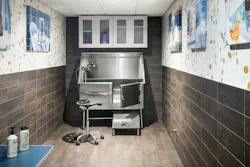
Children’s spaces are a good example. They are no longer secondary amenities tucked away from the rest of the property. In many cases, they are among the most-used spaces and need to be designed with visibility and proximity in mind, especially near places where parents are already spending time. At 21 West End Avenue, children’s spaces have views into adjacent areas such as the pet run and lounge, helping them feel connected to the larger environment.
Pet amenities have evolved in a similar way. They have moved from being an add-on to becoming a core part of the amenity mix. At 20 Exchange Place, we are adding a pet run where one did not previously exist. At 220 East 72nd Street, we converted underutilized rooftop space into a pet run to better meet demand.
I also see a broader emphasis on wellness across age groups. That extends beyond fitness into recovery and mental well-being. At 20 Exchange Place, a sauna on the 19th floor overlooking Lower Manhattan is designed to support that sense of wellness in a way that feels intentional and connected to the building itself.
The design implication is fairly direct: the most effective mixed-use environments are flexible, integrated, and responsive to a wider range of routines. They are less about separating uses by resident type and more about creating a cohesive place that works for people across life stages and daily patterns.
What Designers Can Take From Mixed-Use Now
For architects and interior designers, I do not think the lesson is simply to layer in more uses or expand the amenity list. It is to create environments that feel coherent, adaptable, and grounded in the realities of daily life.
The mixed-use properties that perform best are the ones that behave less like a stack of separate functions and more like a connected community. They make room for work, wellness, gathering, family life, and convenience in ways that feel natural. They use material and spatial consistency to strengthen identity and ease navigation. And they treat flexibility and durability not as secondary considerations, but as part of what gives a property lasting value.
In that sense, mixed-use design is not just about combining programs. From my perspective, it is about shaping a place people can understand, use comfortably, and want to return to every day.
About the Author
Luke Pierce
Luke Pierce is senior vice president, investments, at The Dermot Company, a vertically integrated management firm specializing in high-quality, multi-family communities. He joined The Dermot Company in 2016.