Mobility + Place (Part 1): Designing for the Passenger Experience with John Anthal
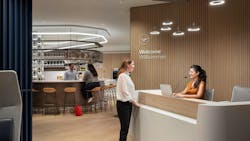
Airports are among the most complex public environments designers have to shape—high-traffic, high-stress spaces where operational efficiency and human experience must work together seamlessly.
In this episode of I Hear Design, we kick off the first installment of the two-part "Mobility + Place" mini-series with John Anthal, who leads Mancini’s aviation sector. Anthal discusses how airport design has evolved in recent years to focus more intentionally on passenger comfort, intuitive wayfinding, seamless security, thoughtful lounge experiences, and a stronger sense of place.
The conversation also explores how airports are increasingly functioning like mini cities, with integrated hospitality, transportation, and commercial offerings, while still needing to feel curated, welcoming, and distinct to their location. Along the way, Anthal shares practical insights that apply far beyond aviation, offering lessons for architects and designers working on any high-traffic, user-centered environment.
Meet Our Guest

John Anthal, Principal, Aviation Practice Director, Mancini
John Anthal is a Principal at Mancini and the firm’s Aviation Practice Director, leading one of its fastest growing and most strategically impactful sectors. Since founding the aviation studio, he has expanded its reach from regional terminals to a national—and now international—portfolio, delivering transformative work at nearly every major U.S. airport for over a decade.
With over one million square feet of aviation projects to his name, John’s experience spans terminal renovations, premium lounges, hold rooms, amenity spaces, and ground support facilities for major carriers including American Airlines, United, and Lufthansa. His notable work includes the design of American Airlines’ Terminal 8 at JFK—recognized as one of USA TODAY’s Top 10 airport lounges worldwide—and the Lufthansa Flagship Lounge at the same airport. He has led major initiatives at JFK, LaGuardia, Newark Liberty, Boston Logan, and Philadelphia International, overseeing award-winning lounges and complex upgrades to concourses, GSE shops, and landside infrastructure. Most recently, he expanded the practice internationally with a project for United Airlines in Hong Kong.
With over 18 years of experience, John is known for his strategic, operations-focused approach, seamlessly balancing design excellence with the logistical and phasing complexities of active terminal environments. He collaborates closely with airline and airport stakeholders to ensure every space aligns with operational goals, passenger experience, and brand identity.
John earned his degree in architecture from the New Jersey Institute of Technology. He currently resides in New Jersey with his family, and while he’s passionate about shaping the future of air travel, he’s most proud of his role as a husband and father—his greatest accomplishment by far.
Key Moments in This Episode
00:00:10 – Introducing the Mobility + Place mini-series
Robert Nieminen opens the episode by framing the first installment of Mancini’s two-part Mobility + Place series, positioning airports as emotionally charged spaces where design can create clarity, comfort, and connection.
00:02:53 – John Anthal’s path into aviation design
John Anthal shares how he came to lead Mancini’s aviation sector and explains what drew him to airport design: its complexity, intricacy, and the challenge of shaping environments that serve both operational demands and human needs.
00:03:49 – Why airports are rethinking the passenger journey
Anthal explains that airports have spent the last five to 10 years focusing more intentionally on passenger experience, aiming to reduce the friction points that make travel feel uncomfortable, confusing, and stressful.
00:07:37 – Security remains the biggest disconnect
Asked where operational priorities still clash with the human experience, Anthal points to security as the biggest pain point—but also one of the areas with the most potential for improvement through automation and touchless processing.
00:08:55 – Could seamless security become the norm?
Anthal discusses the future of TSA PreCheck-style convenience, suggesting that as screening technology improves, security may become more unified, less labor-intensive, and nearly invisible to travelers.
00:05:11 – Balancing brand consistency with local identity
Anthal explores the challenge of creating meaningful experiences in temporary spaces, noting that airports must balance a consistent design language with “moments of locality” that remind travelers where they are.
00:05:51 – How local art and cuisine create memorable airports
From integrated public art to regionally distinctive food offerings, Anthal highlights the small but important ways airports can express a spirit of place and make travel feel less generic.
00:10:16 – What good wayfinding really does
Anthal explains that effective airport signage is about more than graphics—it’s about creating instant orientation by using visual systems that cut through noise and reduce cognitive overload.
00:11:38 – Lounges as a pressure release valve
Drawing from Mancini’s airline lounge work, Anthal describes how lounges can ease travel stress, especially during delays, and why the best ones feel more residential, customer-centric, and human-scaled rather than merely luxurious.
00:13:44 – There is no one-size-fits-all traveler
Anthal reflects on the diversity of airport users—from families and business travelers to older adults and unaccompanied minors—and argues that better travel experiences come from solving for many small needs rather than pursuing one grand gesture.
00:14:25 – Why small service decisions matter
Examples such as family pre-boarding and safe waiting spaces for children traveling alone illustrate how thoughtful, targeted interventions can improve the overall journey in meaningful ways.
00:15:48 – Lighting and biophilia as emotional tools
Anthal points to warm lighting and the introduction of plant life as two details that can significantly soften the sterile, cavernous quality of airport terminals and make them feel more humane.
00:17:14 – Comfort and commerce have to work together
As airports evolve into multi-use environments, Anthal discusses the need to balance convenience and revenue goals with comfort, dwell time, and a curated passenger experience.
00:18:49 – The rise of the airport as a self-contained ecosystem
Anthal describes how airports are increasingly being designed like mini-cities, with co-working areas, showers, hospitality functions, and tighter integration with ground transportation.
00:20:07 – The warning: Don’t let airports become malls
Even as offerings expand, Anthal cautions against filling airports with generic retail for its own sake, arguing instead for curated, location-specific experiences that support local identity and smaller businesses.
00:20:55 – Sustainability starts with airport operations
Anthal discusses how airport authorities and airlines are addressing sustainability, including efforts to electrify ground service equipment and reduce the operational footprint of aviation environments.
00:23:00 – What all designers can learn from airports
Closing the conversation, Anthal offers a practical takeaway for architects and designers working on any high-traffic environment: map the user journey step by step, improve every touchpoint, and let small interventions add up to a major experience shift.
About the Author
 Robert Nieminen
Robert Nieminen
Market Content Director
Market Content Director, American School & University, Architectural Products, BUILDINGS, and interiors+sources
Robert Nieminen is the Market Content Director of four leading B2B publications serving the commercial architecture and design industries: American School & University, Architectural Products, BUILDINGS, and interiors+sources. With a career rooted in editorial excellence and a passion for storytelling, Robert oversees a diverse content portfolio that spans award-winning feature articles, strategic podcast programming, and digital media initiatives aimed at empowering design professionals, facility managers, and commercial building stakeholders.
He is the host of the I Hear Design podcast and curates the Smart Buildings Technology Report, bringing thought leadership to the forefront of innovation in built environments. Robert leads editorial and creative direction for multiple industry award programs—including the Elev8 Design Awards and Product Innovation Awards—and is a recognized voice in sustainability, smart technology integration, and forward-thinking design.
Robert's work has earned him industry-wide recognition throughout his career, including:
- ASBPE Award (2019, 2018, 2017, 2015)—Best Regularly-Contributed Column; retrofit
- TABPI Award (2017, 2016)—Top 25 Entries, Cover Story; Retail Environments
- WPA Maggie Award (2011, 2010, 2008)—Best Publication, Trade; interiors+sources
- FOLIO: Eddie Gold Award (2022, 2007)—Best Feature Article & Special Section; interiors+sources
- Contributing author of ASID’s 2020 Outlook and State of Interior Design report, as well as The State of the Interior Design Profession (Fairchild Books, 2010), which earned a place on the International Federation of Interior Architects/Designers’ “50 Must Read, Must Have” book list.