Foundations of Community (Pt. 2): Designing Better K-12 Schools with Albert Aronov and Nelya Sachakova
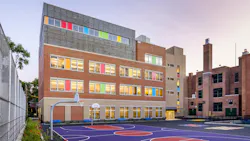




In this episode of I Hear Design, Robert Nieminen continues the three-part Designing the Foundations of Community series with a look at K-12 school design and what it takes to create better learning environments for students and communities today. Joining the show are Albert Aronov, principal at RKTB Architects and head of the firm’s educational studio, and Nelya Sachakova, who leads RKTB’s new school buildings and additions team. Together, they explore how much of today’s school work, especially in dense urban settings like New York City, is less about building from scratch and more about expanding, modernizing, and rethinking existing schools.
The conversation covers what it means to design additions that feel seamlessly integrated with existing buildings while campuses remain fully operational, how accessibility can reshape the experience and dignity of a school, and why public schools must often function as both educational environments and civic infrastructure. Albert and Nelya also discuss art integration, indoor air quality, sustainability, and the challenge of delivering durable, inspiring public schools that are accountable to taxpayers and built to last for generations.
Meet Our Guests
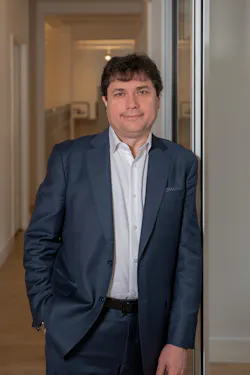
Albert Aronov, AIA, Principal, RKTB Architects
A registered architect in New York specializing in building restoration as well as new construction, Albert Aronov, AIA, joined RKTB after completing his Bachelor of Architecture degree at The City College of New York School of Architecture and Environmental Studies. He was promoted to Associate in 2003, Senior Associate in 2007 and Associate Principal in 2014, and named a partner in 2015. Aronov has managed a range of projects at RKTB including academic, residential, commercial and historic preservation. He has led the education studio since 2004, supervising a large volume of projects for the New York City School Construction Authority. His high level of technical knowledge in exterior envelope work makes him an expert in the field. Aronov is a member of the AIANY Education Committee.

Nelya Sachakova, AIA, CPHD, Associate, RKTB Architects
Nelya Sachakova, AIA, CPHD, began her career at RKTB as an intern while studying at The City College of New York for her Master’s in Architecture. After becoming a full-time architectural designer with the firm upon receiving her degree in 2015, she was promoted to Associate in 2021. Her work includes Capacity & Capital Improvement Projects for the NYC School Construction Authority, multi-family residential buildings, and most recently, a synagogue for a historically significant congregation on Manhattan’s Upper West Side. Sachakova's interest in environmentally responsible architecture led her to acquire a certification in Passive House design, with which she contributes to RKTB’s commitment to tackling climate change through innovation in sustainable design.
Key Moments in This Episode
00:00:11 — Returning to “Designing the Foundations of Community”
Robert opens the second installment of the series and frames the conversation around K-12 school design, focusing on accessibility, sustainability, community use, and the realities of expanding schools in dense urban environments.
00:03:06 — Albert Aronov and Nelya Sachakova introduce their work at RKTB
Albert shares his role leading RKTB’s education studio and long relationship with the New York City School Construction Authority, while Nelya explains how her desire to serve local communities led her to educational design and now to leading RKTB’s new school buildings and additions team.
00:04:04 — Why school additions matter more than blank-slate new builds
Albert explains that in New York City, most K-12 work involves additions to overcrowded schools rather than new construction on vacant sites. He describes the complexity of understanding how an existing school functions before any design work begins.
00:06:47 — Architects as planners, historians, and community liaisons
Nelya expands on how the architect’s role now extends far beyond design to include urban planning, historical sensitivity, community engagement, and navigating legal and policy issues.
00:07:34 — Rethinking how an entire school functions at P.S. 116
Nelya describes how RKTB’s addition to P.S. 116 in Jamaica, Queens created a new U-shaped footprint around a central playground and transformed the building by introducing an accessible, at-grade entrance and a true lobby where none existed before.
00:09:47 — What the addition fixed: trailers, access, and overcrowding
Albert explains how the P.S. 116 project replaced long-standing temporary trailer classrooms, relocated kindergarten spaces into the main building, improved accessibility, and added a more functional cafeteria and kitchen.
00:12:02 — Designing schools for students and the broader community
Using P.S. 87 and other examples, the conversation shifts to schools as civic infrastructure. Albert and Nelya discuss how playgrounds, gyms, and assembly spaces often serve the public after hours and why school design must account for community use from the start.
00:13:48 — Hybrid spaces and the “gymmatorium”
Nelya shares how RKTB designed a flexible gym-auditorium hybrid at P.S. 730 in Brooklyn, complete with retractable bleachers and equipment, allowing the space to host everything from school functions to community movie nights.
00:14:47 — How to expand an active school without disrupting daily life
Albert walks through the operational and project-management realities of building additions while schools remain open, including phasing, scheduling deliveries around arrival and dismissal times, and reserving disruptive work for off-hours and school breaks.
00:16:12 — Accessibility as more than compliance
Nelya explains how accessibility can act as a design driver rather than a checklist item, especially in existing buildings where elevators, corridor connections, and other interventions can reshape how people move through and experience a school.
00:17:36 — Why accessibility is deeply connected to dignity
The conversation broadens from building systems to human experience as Nelya describes accessibility as a way to create full participation in everyday life and make school environments more inclusive.
00:18:14 — Is efficiency at odds with inspiring school design?
Albert argues that tight urban sites force efficient planning, often resulting in clear circulation and stronger organization. Nelya adds that efficiency and inspiration are not mutually exclusive and can be achieved together through research, storytelling, and community-based design decisions.
00:19:58 — Designing for civic identity at P.S. 19
Nelya shares an example from P.S. 19 in the Bronx, where quotes from notable figures buried in nearby Woodlawn Cemetery were integrated into tile throughout the school to reflect neighborhood identity and foster community pride.
00:21:28 — Why public art matters in school design
Nelya discusses RKTB’s work with the School Construction Authority’s Public Art for Public Schools program and explains why integrating art into schools can reflect local culture while also sending students an important message about creativity and possibility.
00:23:17 — What sustainable school design should never treat as optional
Nelya argues that indoor environmental quality—especially indoor air quality—is non-negotiable in schools, citing its impact on health, cognition, and attendance. She also discusses daylight, acoustics, and healthier material choices.
00:25:06 — Why renewables still get treated as optional
The conversation turns to the financial and spatial challenges of incorporating renewable energy, as Nelya explains why solar remains difficult to scale in school projects despite its value.
00:26:11 — Designing schools to last 100 years
Nelya explains how public-school clients think differently about value than private-sector developers, emphasizing durability, low maintenance, and long-term performance. She also highlights RKTB’s role in researching methods, materials, and cost strategies.
00:27:35 — The mistakes architects make with school additions
Albert identifies two recurring issues: additions that feel disconnected from the existing building on the inside, and additions that either mimic the original architecture too literally or fail to respond respectfully to scale, proportion, and materials.
00:30:10 — Why design now has to prove real educational outcomes
Albert argues that architects are now expected to do more than create attractive or efficient school buildings—they must connect design decisions to measurable improvements in learning, health, comfort, and performance for students and staff.
00:32:09 — Coming full circle on the architect’s expanding role
Nelya closes by returning to the idea that school design increasingly requires architects to wear many hats, which makes the work both challenging and rewarding.
About the Author
 Robert Nieminen
Robert Nieminen
Market Content Director
Market Content Director, American School & University, Architectural Products, BUILDINGS, and interiors+sources
Robert Nieminen is the Market Content Director of four leading B2B publications serving the commercial architecture and design industries: American School & University, Architectural Products, BUILDINGS, and interiors+sources. With a career rooted in editorial excellence and a passion for storytelling, Robert oversees a diverse content portfolio that spans award-winning feature articles, strategic podcast programming, and digital media initiatives aimed at empowering design professionals, facility managers, and commercial building stakeholders.
He is the host of the I Hear Design podcast and curates the Smart Buildings Technology Report, bringing thought leadership to the forefront of innovation in built environments. Robert leads editorial and creative direction for multiple industry award programs—including the Elev8 Design Awards and Product Innovation Awards—and is a recognized voice in sustainability, smart technology integration, and forward-thinking design.
Robert's work has earned him industry-wide recognition throughout his career, including:
- ASBPE Award (2019, 2018, 2017, 2015)—Best Regularly-Contributed Column; retrofit
- TABPI Award (2017, 2016)—Top 25 Entries, Cover Story; Retail Environments
- WPA Maggie Award (2011, 2010, 2008)—Best Publication, Trade; interiors+sources
- FOLIO: Eddie Gold Award (2022, 2007)—Best Feature Article & Special Section; interiors+sources
- Contributing author of ASID’s 2020 Outlook and State of Interior Design report, as well as The State of the Interior Design Profession (Fairchild Books, 2010), which earned a place on the International Federation of Interior Architects/Designers’ “50 Must Read, Must Have” book list.