Denver Design District Evolves into a Living Canvas for Design Community
Inside Denver Design District's Evolution
- Denver Design District is redefining itself as a “living canvas,” expanding beyond showrooms with pop-ups, public art, and culinary experiences.
- Rooted in modernist principles, the rebrand ties sustainability to durable materials, efficient systems, and site-sensitive design.
- Herbert Bayer’s Articulated Wall and Bauhaus-inspired geometries reinforce the district’s modernist foundation and contemporary identity.
- Serving designers, students, and the broader creative community, the district is a regional hub for future-focused interiors thinking.

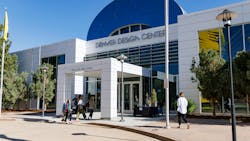
The Denver Design District (DDD) in the Rocky Mountain region is evolving, building on more than 40 years of luxury interior design leadership to take on a broader and more ambitious role, positioning the district as a human-centered, future-facing force that connects people, materials, and place.
Developed in collaboration with creative studio Wunder Werkz, the DDD’s refreshed brand offers a more inclusive and approachable destination for trade professionals, consumers, and the creative community.
“This human-centered approach can be described as a ‘living canvas,’ where showrooms coexist alongside pop-ups, public art installations, and culinary concepts that we are actively curating as a result of the discovery process that the brand refresh has facilitated,” said Dan Cohen, CEO of the Denver Design District. “It signals the direction of Denver’s design future and underscores the strength and character of the uniquely curated, continually growing tenant roster that defines this location.”
From Showroom Destination to Design Ecosystem
While the DDD’s legacy in high-end interiors remains core, the rebrand creates a more inclusive and accessible space for professionals and the community to enjoy shopping, programming, and educational events that drive design forward.
“The new Denver Design District branding mirrors the energy and sophistication we’re seeing in the design landscape in the Rocky Mountain Region,” said Amy Gagliano, director of marketing and leasing. “We’re excited to unveil new concepts, new experiences, and new showrooms, alongside our longstanding showrooms that continue to define the District.”
Showrooms, Pop-Ups, and Public-Facing Experiences
With over 350,000 sq. ft. of space, five buildings, and 52 showrooms and design and creative businesses, the district’s expanded vision as a living canvas melds showrooms, pop-ups, art installations, and culinary destinations that ground design in everyday life. Interior designers can source materials from international and domestic manufacturers, including Dell Anno cabinetry or Phillip Jeffries wallcoverings—the newest showrooms in the Denver Design District.
The district has plenty of room to grow, too. Consumers can shop at pop-ups like Wanderlusty Global Décor for home and fashion pieces, while art enthusiasts can purchase fine art at Fascination Street art gallery.
Modernist Roots Shape the District’s Design Language
The District’s modernist foundation inspires a sustainability-minded approach to material use, as seen in Herbert Bayer’s artwork. The iconic 1985 Articulated Wall continues to anchor the district and is widely regarded as one of the most influential Bauhaus public art installations in the country. Constructed from a repurposed ship mast as the central spine, stacked, rotating blocks shift the stark yellow color as light shifts throughout the day and from a person’s vantage point. Two additional Bayer works have been added, with more planned.

Modernist principles are also seen in the sidewalk saw-cutting patterns inspired by Bayer’s geometry and Anni Albers’ tapestry work. Josef Albers’ Interaction of Color work informed the brand palette, bringing contrast and energy to the custom typeface’s contemporary style. Local design firm Superbloom helped the DDD phase out landscape spaces from turf and cobble into native plants, locally sourced stone seating, and a material palette refreshed for the public which supports long-term material performance and aligns with Colorado’s natural environment.

“Modernist thinking encourages materials and systems that are efficient, and built to last, reducing waste and supporting more sustainable life cycles,” said Cohen. “By connecting historic design philosophies with contemporary sustainability goals, the Denver Design District positions itself as a place where the future of interiors is thoughtfully shaped.”
The district connects historic design philosophies with contemporary priorities around sustainability, inclusivity, and human experience—an evolution that reflects broader societal shifts. The district is a hub for creative communities in the Rocky Mountain region across Colorado, Wyoming, Utah, New Mexico, and Montana.
“It functions not only as a destination, but as a vibrant ecosystem where regional identity and future-focused design thinking intersect,” he said. “Trends are not followed here; they are set.”
More on Curating Brand Identities
 Lounge area with soft seating and chandelier overhead at the Westin La Paloma Hotel.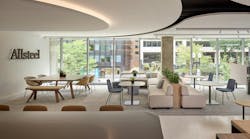
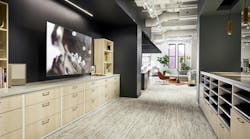 Kimball International Boston Showroom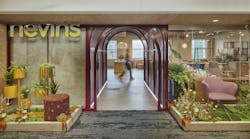
About the Author
 Lauren Brant
Lauren Brant
Staff Writer, interiors+sources and BUILDINGS
Lauren Brant is Staff Writer for both interiors+sources and BUILDINGS. She is an award-winning editor and reporter whose work has appeared in daily and weekly newspapers. In 2020, the weekly newspaper won the Rhoades Family Weekly Print Sweepstakes—the division winner across the state's weekly newspapers. Lauren was also awarded the top feature photo across Class A papers. She holds a B.A. in journalism and media communications from Colorado State University-Fort Collins and a M.S. in organizational management from Chadron State College.