ASID 2025 Guide Details Salaries, Benefits, and Workforce Shifts
Key Takeaways
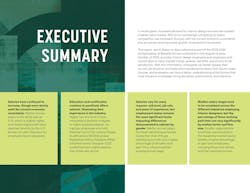
- Median full-time interior design salaries range from $75,000 to $99,999 despite slower growth.
- Education and professional credentials directly correlate with higher interior design earnings.
- Benefits like health insurance and paid time off drive recruitment in tight labor markets.
- Part-time employment significantly contributes to gender pay differences across the profession.
The American Society of Interior Designers (ASID) has released its 2025 Compensation & Benefits Guide, delivering timely, data-driven insight into salaries, benefits packages, and labor market dynamics shaping today’s interior design profession.
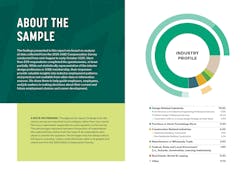
Informed by over 800 respondents to the 2025 ASID Compensation & Benefits Survey conducted from mid-August to early October 2025, the report presents a comprehensive snapshot of how designers are navigating economic uncertainty, evolving workplace expectations, and an increasingly competitive talent market.
“In a rapidly evolving labor market, access to reliable compensation and benefits data is critical,” said Khoi Vo, CEO of ASID. “This guide provides firms and designers with a clear, evidence-based understanding of how the profession is changing—so they can make informed decisions that support long-term business strength and career sustainability.”
Interior Design Salary Growth Slows as Talent Demand Remains High
According to the U.S. Bureau of Labor Statistics, mean annual salaries have risen $1,472 (2.1%) for employed interior designers between May 2023 and May 2024. ASID survey respondents reported that the median annual salary range is higher, ranging from $75,000 to $99,999 for full-time employees. The median salary range for part-time interior design practitioners was $25,000 to $49,999. While wages continue to climb, the pace has slowed amid broader economic pressures, including elevated interest rates, higher material costs, and project delays across several commercial sectors.
Despite this moderation, demand for interior design services remains strong in areas like luxury residential, entertainment, workplace retrofits, and adaptive reuse—particularly in underperforming urban retail environments in cities such as Denver, Minneapolis, and Seattle.
How Education, Credentials, and Employment Status Drive Interior Design Pay
The report confirms that education and professional credentials directly correlate with higher earnings. Designers holding bachelor’s or graduate degrees—as well as NCIDQ and RID/CID credentials—consistently report higher median salaries than peers without formal certifications.
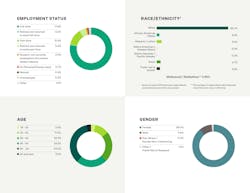
Employment status remains the single largest factor influencing the gender pay gap. A comparison of the annual salary by gender revealed that 48% of females earn between $50,000 and $99,999, with an estimated median salary of between $75,000 and $99,999, whereas 32.8% of males reported earning within this range. Of design professionals earning salaries over $150,000, 22.3% were male, and 12.5% were female.
Looking specifically at full-time employees, 52.7% of females and 32.8% of males reported earning $50,000 to $99,999. Nearly 15% of females and 24.1% of males reported full-time salaries greater than $150,000.
While median annual salaries for women are lower on average, ASID attributes much of this difference to the higher percentage of women working part-time—particularly within smaller firms and residential practices, where flexible schedules are more common.
Median salary ranges themselves remain relatively consistent across design sectors. What varies significantly is the share of part-time employees, with smaller organizations and residential studios employing more part-time professionals, including retirees returning to the workforce.
Why Benefits and Workplace Perks Matter in Today’s Interior Design Labor Market
Beyond wages, ASID’s report emphasizes that benefits, bonuses, and reimbursements play a critical role in attracting and retaining talent. Employees consistently rank health insurance and paid time off as their top priorities, yet sole proprietors and firms with fewer than 10 employees are less likely to offer these benefits.
Respondents to the 2025 ASID Compensation & Benefits Survey ranked the five most important benefits:
- Health Insurance
- Paid Vacation and/or Paid Time Off
- Personal Retirement Savings Plan
- Car/Travel Cost Allowance
- Dental Insurance
Designers also continue to value workplace environments that support well-being. Preferred perks include flexible schedules, access to natural daylight, work-from-home options, ergonomic workstations, and healthy food and beverage options—signaling a broader shift toward holistic, human-centered workplaces.
Overall job satisfaction remains high, with employees reporting strong connections to their roles, teams, and firms. However, satisfaction drops when it comes to compensation and benefits, especially among mid-level professionals and those who have been in their positions for fewer than two years.
Another benefit category that is a win-win for employees and employers is professional development opportunities. Respondents most frequently replied that their current position offers continuing education, licensure or certification, and professional membership dues. On the other hand, 16.8% of respondents said they receive none of the listed professional development opportunities. A Pearl Collective survey asked interior design business owners which benefits employees expected or requested most, with work-life balance at the top of the list.
Future-Ready Interior Design Firms Prioritize Transparency, Growth, and Leadership
With economic uncertainty expected to persist through 2026, ASID encourages firm leaders to focus on transparent communication, meaningful work assignments, and clearer advancement pathways. As competition for skilled designers continues, compensation strategy—paired with flexibility, wellness, and professional growth—will be essential for building resilient, future-ready practices.
For interior designers and employers alike, the 2025 Compensation & Benefits Guide offers not just benchmarks, but actionable insights supporting smarter hiring, stronger teams, and more sustainable business operations across the industry.
Next Steps
About the Author
 Lauren Brant
Lauren Brant
Staff Writer, interiors+sources and BUILDINGS
Lauren Brant is Staff Writer for both interiors+sources and BUILDINGS. She is an award-winning editor and reporter whose work has appeared in daily and weekly newspapers. In 2020, the weekly newspaper won the Rhoades Family Weekly Print Sweepstakes—the division winner across the state's weekly newspapers. Lauren was also awarded the top feature photo across Class A papers. She holds a B.A. in journalism and media communications from Colorado State University-Fort Collins and a M.S. in organizational management from Chadron State College.