Coverings 2026 Tile Trends: 3 Surface Directions That Stood Out
What We Learned
- How tile brands are softening minimalist palettes with more texture, tone, and warmth
- Why green continues to resonate, especially in finishes with greater depth and variation
- How digital printing, glazing, and pressing are sharpening tile’s material mimicry
- Where technology is helping preserve traditional and heritage ceramic looks
This week at Coverings 2026, I kept noticing the same through line across very different booths: ceramic surfaces are getting softer in mood, richer in detail, and smarter in how they’re made.
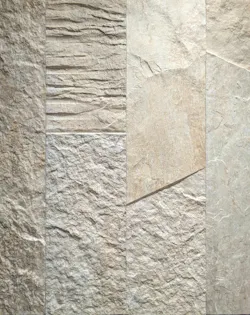
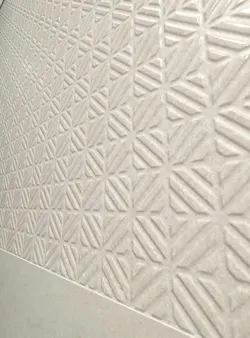
1. Minimalism, but make it more approachable and human.
When Coverings spokesperson and designer Alena Capra identified one of the top tile industry trends as “Brutalish sanctuary,” I admit to having a brief confused-puppy moment. But walking the exhibits made the idea click: this is minimalism with the severity dialed down, and the craftsmanship turned up.
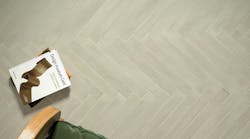
Across booths, subtle shifts in tone, texture, pattern, and finish gave shades like ecru, cream, sand, pale gray, and eggshell more warmth and presence. The result was calm and cohesive, but not flat. That aligns with the desire for grounding and constancy that consultant Ryan Fasan referenced in Tile of Spain’s Day 1 trend outlook. And because ceramic is built to last beyond short-lived aesthetic swings, it’s easy to see why hospitality and other commercial sectors may lean into these quieter neutrals at scale, while saving bolder color for accents or feature moments.
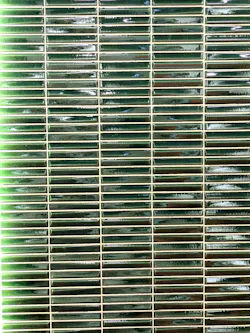
2. Don’t give up on color—just use it with nuance.
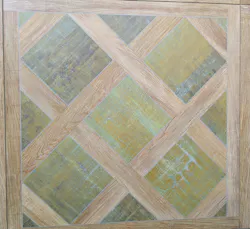
Fasan also pointed to a growing appetite for interiors that feel more personal and connected, with color choices moving away from fleeting statement shades and toward hues rooted in nature. As Capra indicated, green still looks like a standout, spanning deep forest tones, leafy variations, and jewel-like shades such as jade and emerald.
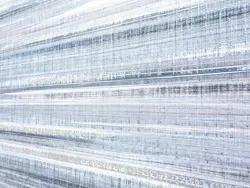
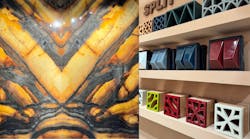
As green is often credited with a calming and balancing influence, it’s no wonder it continues to play a role across a variety of tile formats. What keeps it interesting is the detail. Advanced digital printing and glazing are giving green tile more depth, movement, and shade variation, whether it shows up in veined marble looks or glossy decorative formats with ripple and relief. It still brings that sense of vitality and restoration, but with more texture and sophistication.
3. Traditional looks are gaining new life through technology.
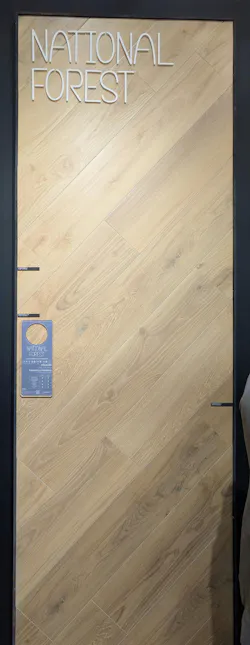
On the exhibit hall tours, manufacturer representatives repeatedly emphasized how far ceramics manufacturing has come. One of the most compelling outcomes is replication—not mass production for its own sake, but the ability to convincingly recreate the look of materials that may be costlier, harder to source, or less durable.
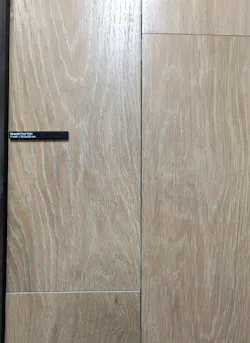
Wood-look tile is one easy example, especially as ceramics continue the transition between indoor and outdoor spaces. These offerings keep improving. The visual detail is sharper, including more convincing grain, without creating surfaces so deeply pitted that they become harder to clean. There’s also a preservation angle here: The same advances can help fabricators reproduce heritage ceramics that are no longer available, extending the influence—or even the physical life—of historic surfaces.
What I found most compelling at Coverings 2026 was not one singular look, but the way these trends overlap: quieter palettes with more humanity, color with more depth, and technology in service of both innovation and preservation.
More on Coverings
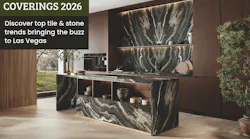 Dark veined stone look ceramic surfaces paired with slotted wood walls and large windows in a display environment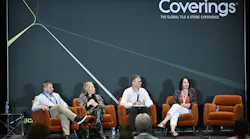
About the Author
 Carrie Meadows
Carrie Meadows
Head of Content
Carrie Meadows is Head of Content for interiors+sources, where she leads editorial strategy, content development, and brand storytelling focused on the people, projects, and innovations shaping the design industry. With more than two decades of experience in B2B media, she has built a career connecting technical expertise with creative insight—translating complex topics into meaningful stories for professional audiences.
Before joining interiors+sources in 2024, Carrie served as Editor-in-Chief of LEDs Magazine within Endeavor Business Media’s Digital Infrastructure & Lighting Group, guiding coverage of emerging lighting technologies, sustainability, and human-centric design. Her earlier editorial experience spans across Laser Focus World, Vision Systems Design, Lightwave, and CleanRooms, where she managed print and digital publications serving the optics, photonics, and semiconductor sectors.
An advocate for clear communication and thoughtful storytelling, Carrie combines her editorial management, SEO, and content strategy expertise to help brands and readers stay informed in a rapidly evolving media landscape. When she’s not crafting content, Carrie can be found volunteering at a local animal shelter, diving into a good crime novel, or spending time outdoors with family, friends, and her favorite four-legged friends.