What Residential Design Can Teach Commercial Interiors
What Designers Should Know Across Markets
- Cross-market work requires honesty about expertise, scope, and when to bring in outside partners.
- Material choices must balance beauty, touch, durability, maintenance, and client expectations.
- Residential details can help commercial spaces feel more personal, memorable, and emotionally connected.
- Comfort, code, and accessibility belong in the same conversation from the start.
My career began in residential design and, like many residential designers, I had the itch to be involved with boutique hospitality. The allure of working on projects that welcome a wide range of guests—with the bonus of a client who is slightly less emotionally involved—was very real for me. Prior to creating Rebel House Interior Design, I joined a real estate development team in the early stages of launching a new boutique hotel brand. The work was creative and the speed was breakneck; I learned an incredible amount in a short period of time.
That opportunity, paired with my prior experience in high-end residential design, informed much of what Rebel House became. Many of our team members have hospitality backgrounds when they join us, even though residential makes up most of our project load. I took key lessons from both markets when building my own company and am excited to share how those two worlds continue to inform each other.

The Importance of Transparency
Our firm has designed a variety of project types, from gut renovations of family homes to brand-inspired redesigns of luxury spas and experience-forward hotels. Prior to taking on those projects, our team had relevant experience. Still, as we learned more about each client and their needs, there were times we needed to communicate the limits of our expertise to ensure we could deliver at a high level. That might involve bringing in another type of consultant to fill the gap. Lean on your experience and be honest when you are out of your depth. It builds trust with your clients and creates more successful outcomes.
What is unchanging, regardless of project type or experience level, is a commitment to elevated service. A high level of organization and communication will help any project and build trust with your client and other partners. That is often why we target team members with hospitality experience—not only for their industry knowledge, but also for their comfort with detailed drawings and documentation. Disorganization leading to a mistake in an 80-key hotel project is much more costly than one bedroom of a single-family home.
Business Tip: Be transparent about your expertise early, then build the right consultant and partner network to fill gaps before they become project risks.

A Focus on Tactility + Texture
Your job as a designer is to fight for the materiality that will significantly impact both look and feel, while understanding the use case. Whether in residential or commercial, if you specify a material that won’t hold up to client needs—like unsealed marble on a hotel lobby bar or a rug with high-silk content in an area frequented by the family pet—you have failed, regardless of how good it looks on install day. Understanding material performance is key. Maybe you specified unsealed marble with the intent for it to patina, but you have to be able to communicate that effectively to your client. And if we are being honest, even if a client approves, I would think twice. Those awkward teenage years of the patina may be more than they bargained for during the design presentation.
With this in mind, we’re meticulous with material selection to ensure textiles are soft, welcoming, luxurious, livable, and able to withstand high-traffic use. This is where great partners come in. Lean into your vendor relationships to find commercial-grade fabric with a high rub count that still feels soft under your fingertips. Those partners can also tell you that a fabric that lists 100,000 Wyzenbeeks may still look worse for wear after the first year. You’ll develop a shortlist of go-to materials over time, but those relationships will also introduce you to new solutions.
Business Tip: Treat material performance as part of client service: Specify for beauty, use, maintenance, and the real-world wear your client may not know to anticipate.
The Beauty in the Details
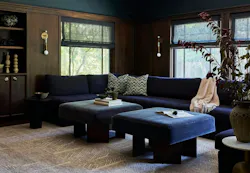
While tactility and materiality are crucial in commercial projects, the true magic from a residential design background lies in our ability to infuse a commercial project with personal details.
In previous iterations of commercial design, these details were often stripped down in favor of value engineering. Today, more commercial space owners and leaders recognize the value of thoughtful details. While art, furnishings, and lighting all play key roles in the feel of a space, we’re consistently inspired by the smaller, less obvious elements that make each residence we design unique. It’s an honor to bring that same level of consideration into commercial spaces.
Woodwork, trim, and upholstery are areas commercial spaces often overlook in favor of the bottom line—but through a residential lens, they become opportunities to infuse personality. A residential designer is trained to ask how a space makes an inhabitant feel, an invaluable asset when designing for visitors, employees, and clients who will be using a commercial space nearly as often as their own home.
Business Tip: Use details strategically. Small investments in trim, upholstery, lighting, art, or custom moments can help commercial clients create spaces that feel more memorable, personal, and worth returning to.

Where Comfort Meets Compliance
The power of hiring a residential-focused firm to design a commercial space lies in our ability to blend requests and requirements. We know residential design and how to apply these principles into a commercial setting that needs to meet code requirements. The result is a space that feels inviting, warm, and welcoming while standing up to daily wear and tear.
One of the most important ways to ensure commercial spaces include the comfort of home is to ensure the space is up to code and as accessible as possible. True luxury is found when all patrons and visitors of a space can feel as welcomed and comfortable as they do in their own home.
For designers crossing between residential and commercial work, that means comfort, compliance, and hospitality should be considered together from the beginning—not layered in at the end.
Business Tip: Build accessibility and code considerations into the design conversation early so comfort, compliance, and hospitality work together from the start.
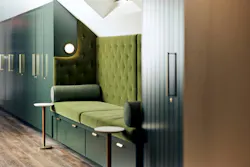
At Rebel House, our greatest accomplishment is designing spaces that allow the people within them to feel grounded yet inspired. When considering materiality, design details, and comfort for all, this feeling can be executed and experienced across design verticals, from residential to commercial and back again.
About the Author
 Marli Jones
Marli Jones
Rebel House principal designer and owner-director Marli Jones began her career as a senior designer in both San Francisco and Chicago—but in true rebellious fashion, she set off on her own to build Rebel House in 2015. Combining her passion for art with her tenured knack for creating meaningful, lasting relationships with clients, vendors, and partners alike, Marli leads a team of talented designers and has built a dynamic portfolio of residential and hospitality projects. Proving that true rebellion is found through inherent authenticity and creativity, Marli’s unexpected, evocative, and textural work has been featured in hospitality and residential projects throughout the U.S., earning recognition as an AD Pro Designer and on AD’s list of 26 Chicago Designers to Know.